
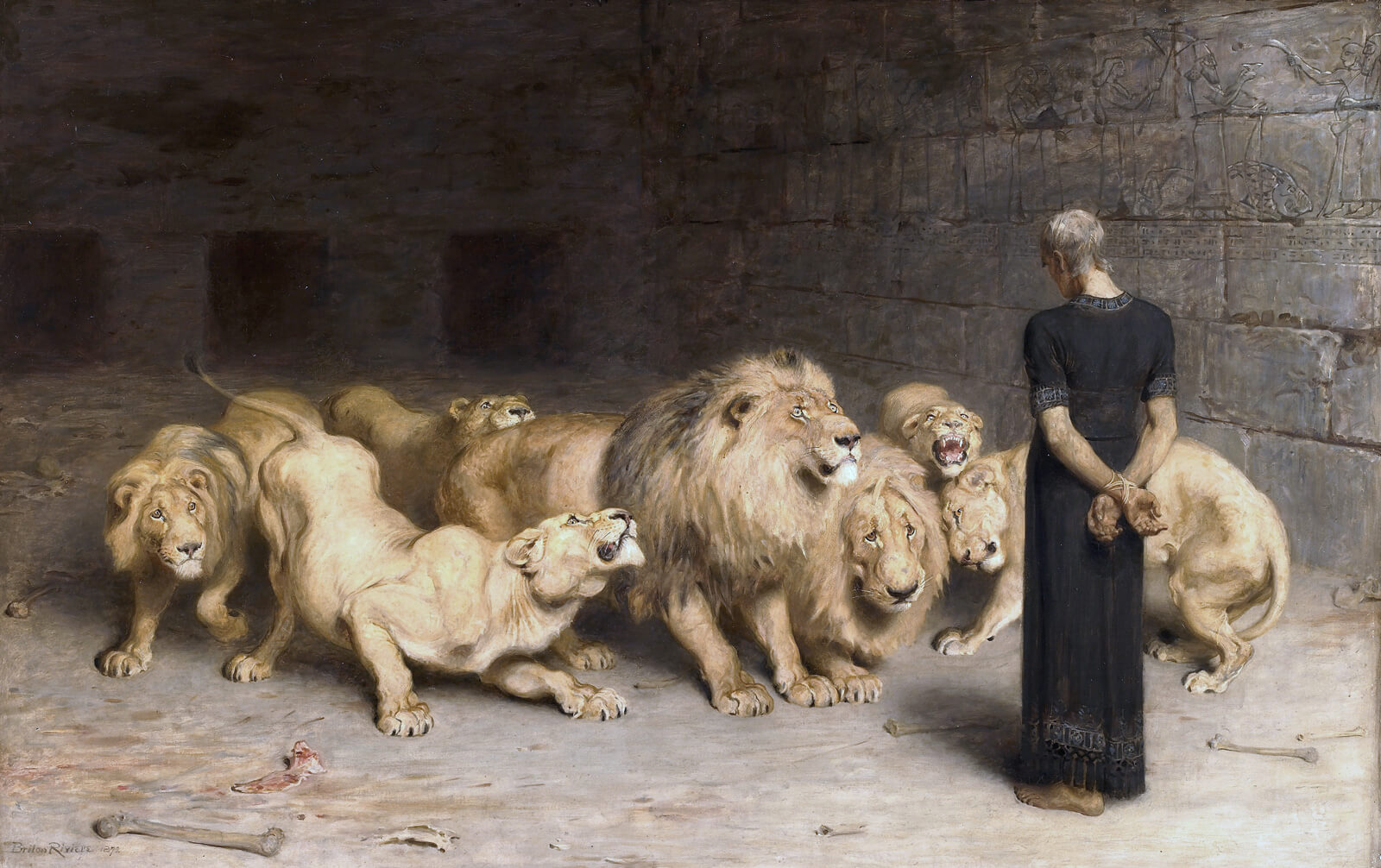
Bit of art today in the form of Daniel in the Lion’s Den by British artist Briton Rivière (1840-1920). He was of French Huguenot (French Protestant) descent, which is why he had that surname.
In 1872, he painted the above incredible picture (Daniel in the Lions’ Den). He was already an established painter by then whose work was exhibited in the Royal Academy in London.
He was extremely dedicated to his craft, spending endless hours observing lions at London’s Zoo before developing out the above image. Thus, let’s explore what he got up to today in this roarsome (awesome) post.
Briton Rivière Wows the Victorian Era With Daniel in the Lions’ Den
See the above video essay if you fancy some further insights here, some of which we cover below. And if you want to see the piece, it’s installed at Walker Art Gallery in Liverpool.
Now, we like this piece as the artist’s depiction of the lions is phenomenal. According to legend, he spent an inordinate amount of time at London Zoo to understand the movement of the beasts, all so he could accurately reflect their movements on canvas.
We’re not religious here at Professional Moron, so the pious nature of scene is irrelevant on us. But for the record, in the Bible you have a Jewish official called Daniel working for King Darius. Jealous rivals throw him into a lions’ den for praying without after clearance from the King.
However, once in the pit God saves the day by sending an angel to shut the lions’ various, respective, slobbering mouths.
Rivière’s depiction became highly popular during the Victorian era. At least that’s what we’ve seen consistently claimed by various sources (such as the above video).
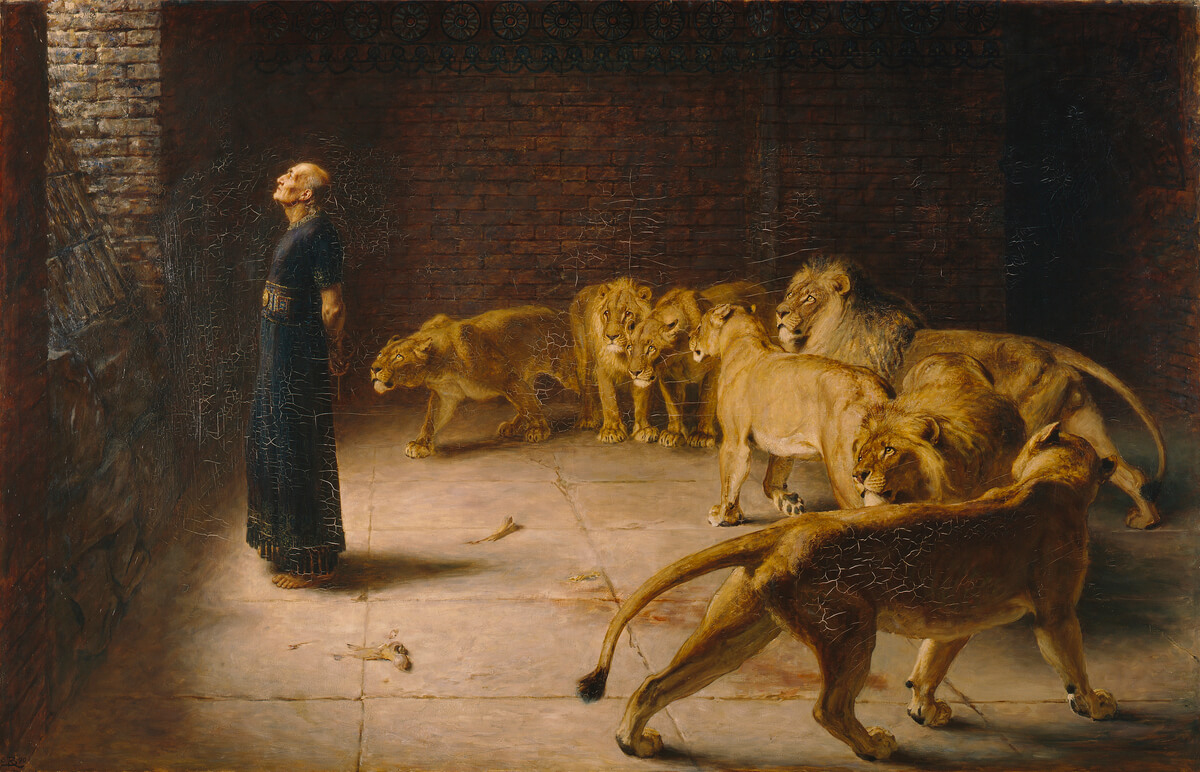
The popularity led to an 1890 sequel called Daniel in the Lions’ Den II: This Time it’s Goddamn Personal (we lie, it was really called Daniel’s Answer to the King). This one is actually installed at Manchester Art Gallery in the city centre.
As for Briton Rivière, he was born and raised in London, where he went on to study at university in 1867.
There’s not a huge amount of information about him online, but he did leave some records. In August 1897 he contributed to a book called Chums Boys Annual. In his essay How I Paint Animals he wrote:
“The only way to paint wild animals is to gradually accumulate a large number of studies and a great knowledge of the animal itself, before you can paint its picture … I paint from dead animals as well as from live ones. I have had the body of a fine lioness in my studio … I have done a great deal of work in the dissecting rooms at the Zoological Gardens from time to time.”
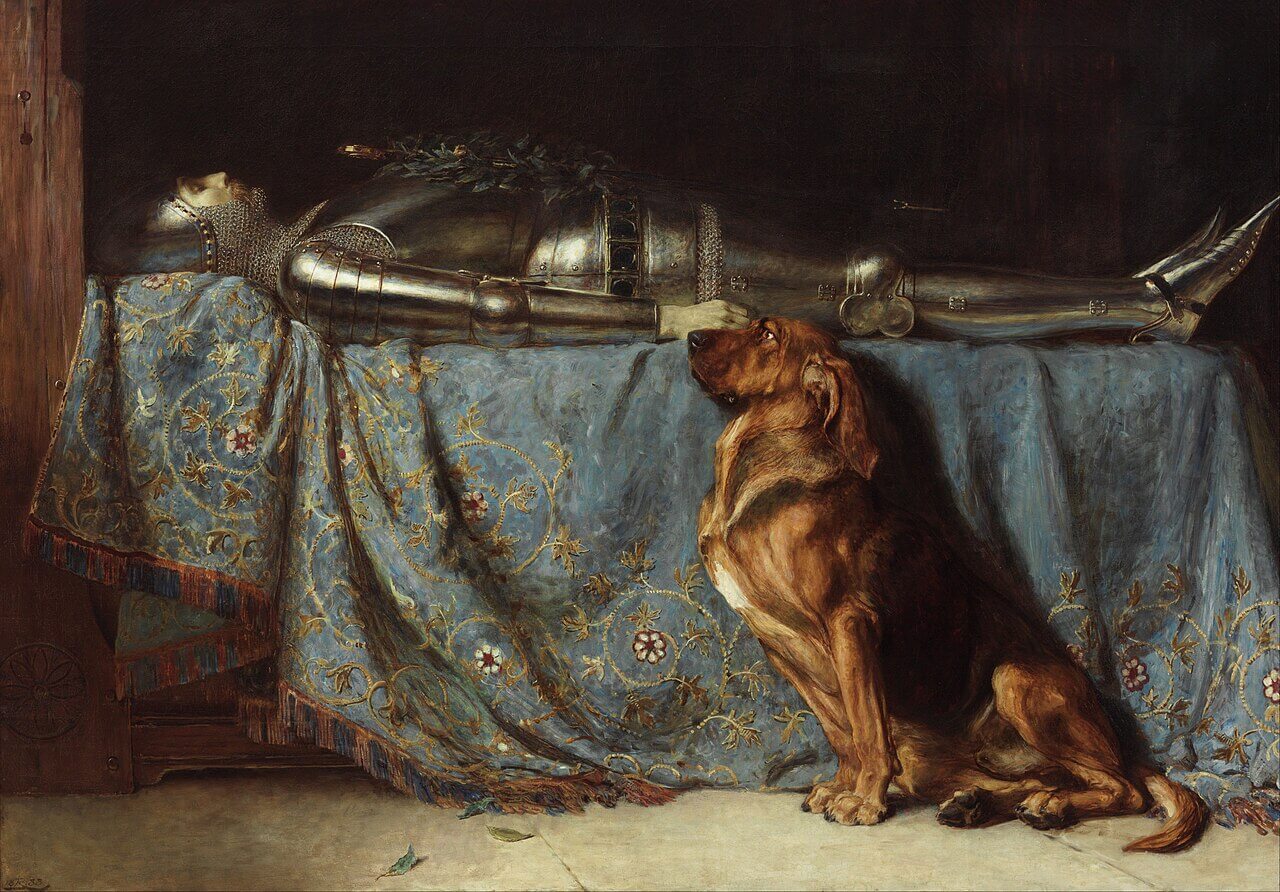
He devoted most of his creative efforts toward capturing animals, often depicting them in a religious context. Another example being the below Requiescat (1888), which shows a bloodhound loyally sitting beside its deceased owner.
If you’d like to see more of his work, there’s a bunch uploaded at Wikiart here: Briton Rivière Art Renewal.
