
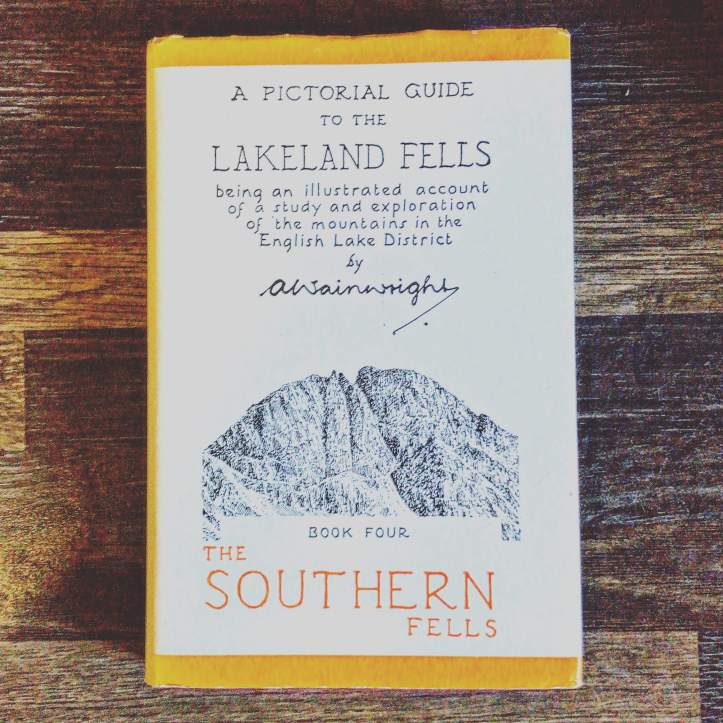
A. Wainwright (1907-1991) was an English fellwalker and guidebook author most famous for his Pictorial Guide to the Lakeland Fells series of books.
Here we’ve randomly picked one in the form of The Southern Fells.
This was book four in the series, with seven in total. It launched in 1960 and is notable for its astonishing attention to detail, hand-drawn maps, and hand-written notes.
The Southern Fells: Being an illustrated account of a study and exploration of the mountains in the English Lake District
The books functioned as a walking guide for… walkers! Wainwright’s extensive notes meant readers could pick and choose from locations they wanted to traverse.
Other than tea and posh accents, England is famous for its sweeping countryside (in some bits, anyway). In the Lake District there are 2,362 km² of national park. That’s 912 square miles.
Wainwright had a lot of ground to cover with all of this, so it was with great relish he went out there and did his pedantic thing.
And he did delight in it all as he notes at the start of The Southern Fells:
“The Southern Fells comprise two well-defined mountain systems. The larger is the Scafell-Bowfell massif, which forms a great arc around the head of Eskdale; it is bounded by Wasdale in the west, and eastwards by headwaters of the Duddon and the Brathay, while to the north the high ground descends into Borrowdale and Great Langdale. Within this area the fells are the highest, the roughest and the grandest in Lakeland: they are of volcanic origin and the naked rock is much in evidence in the form of towering crags and wildernesses of boulders and scree. Progress on foot across these arid wastes is slow and often laborious, but there is an exhilarating feeling of freedom and sense of achievement on the airy ridges poised high above deep valleys. This is magnificent territory for the fellwalker. There is nothing better than this.”
What follows with his hand-written notes (and there are a lot of them)? All the drawings he committed himself to.
These are very impressive and meticulously pieced together. Here’s a demonstration of a mere smidgen of the work he did here.
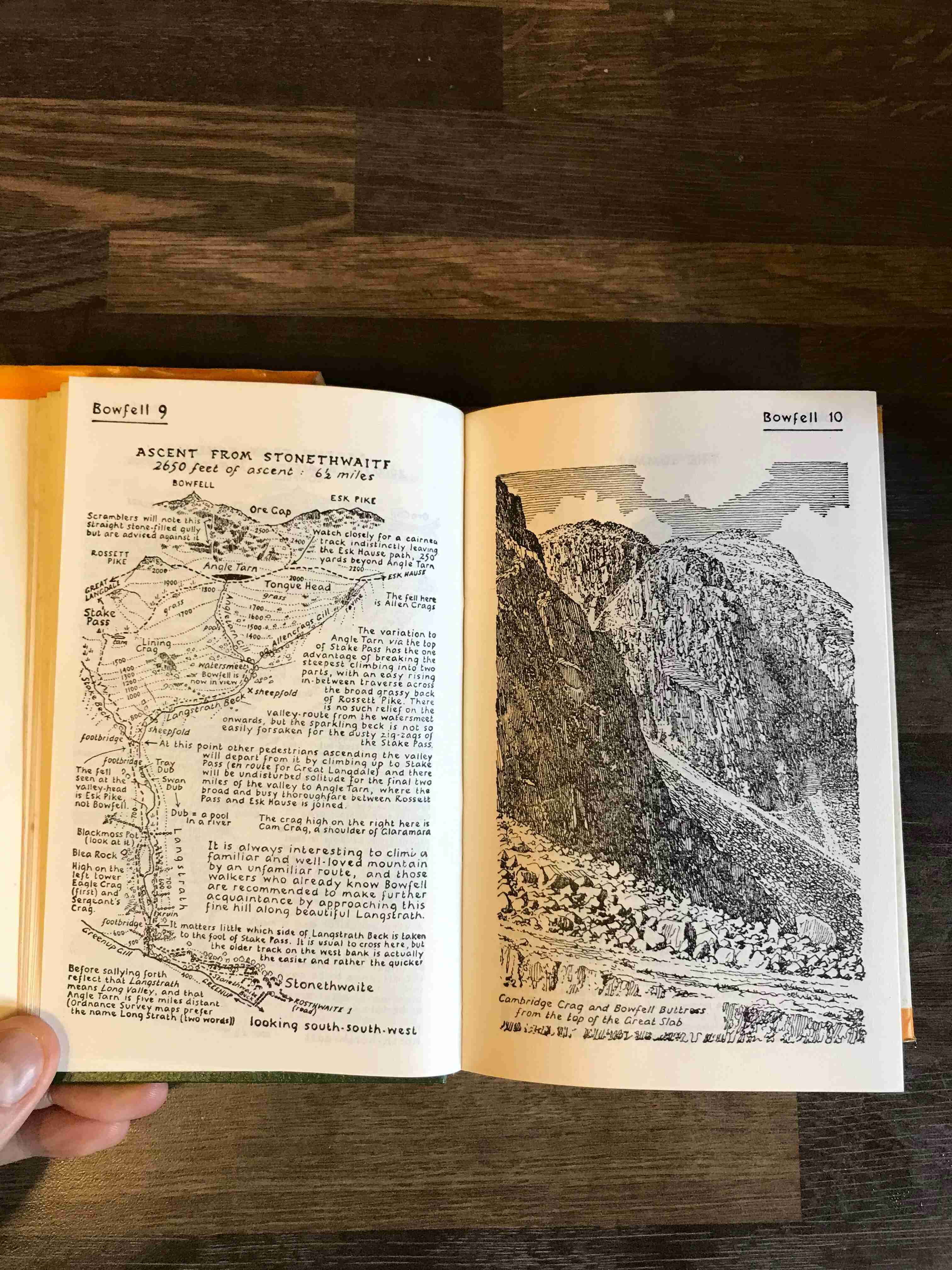
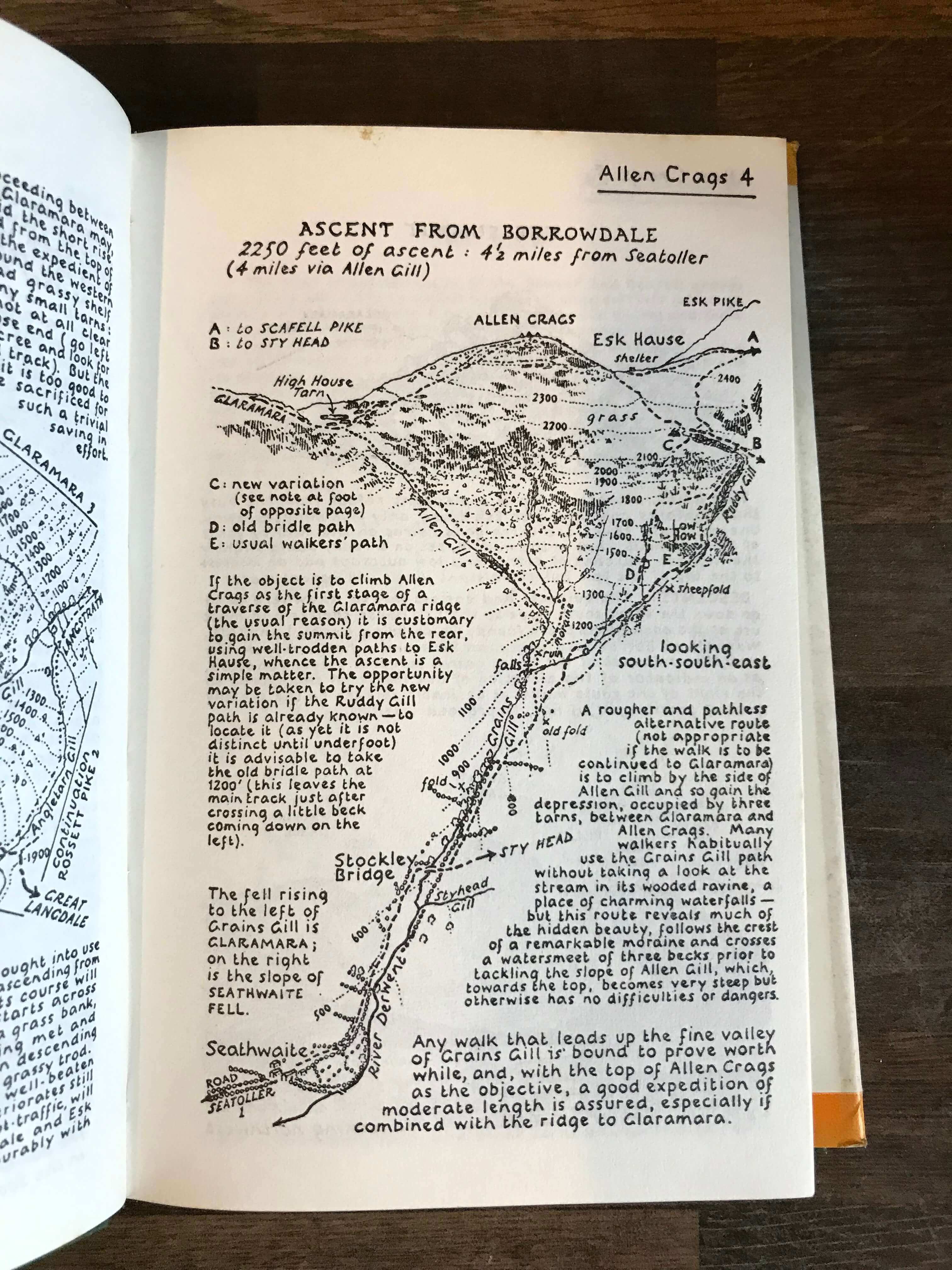
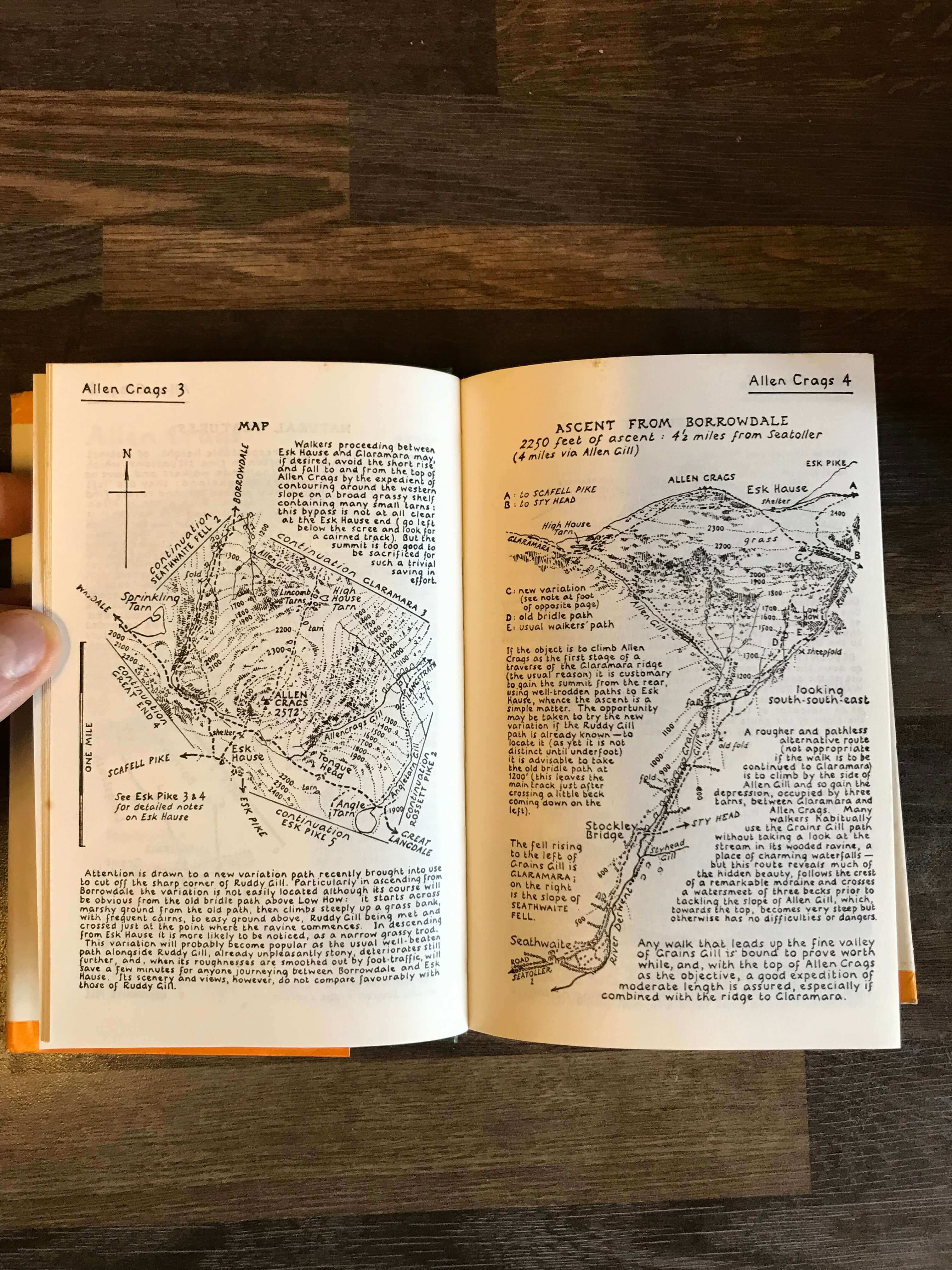
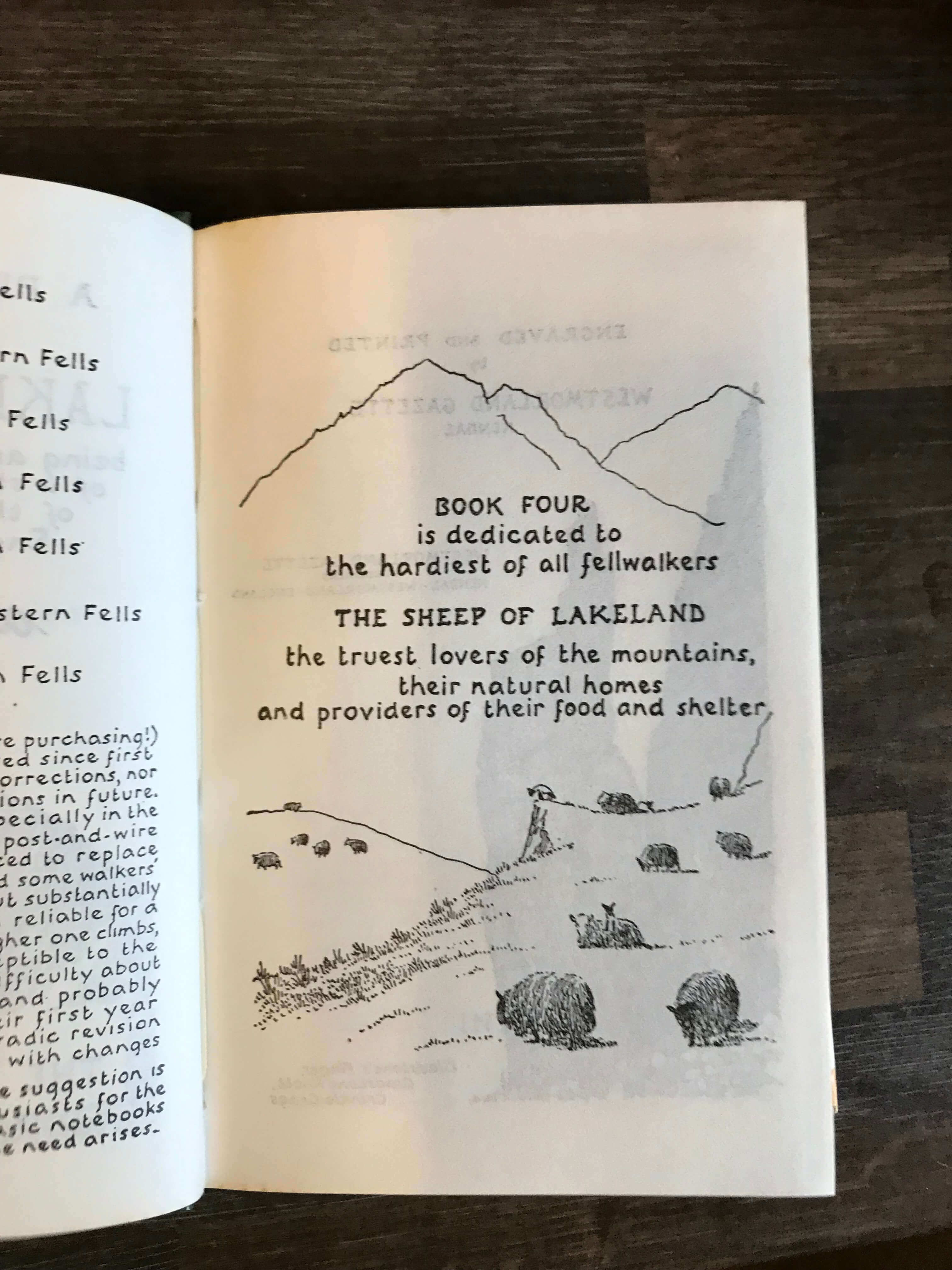
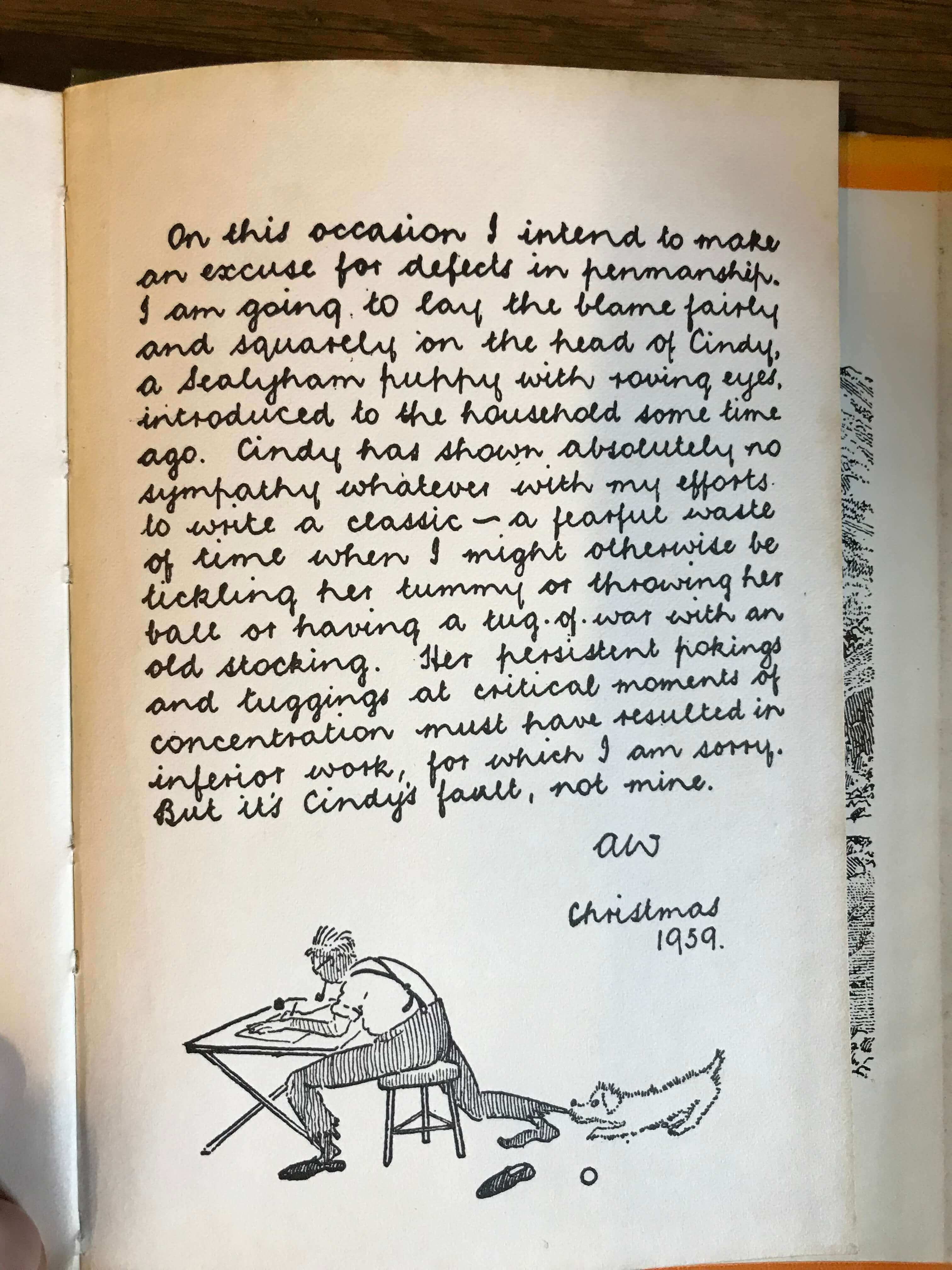
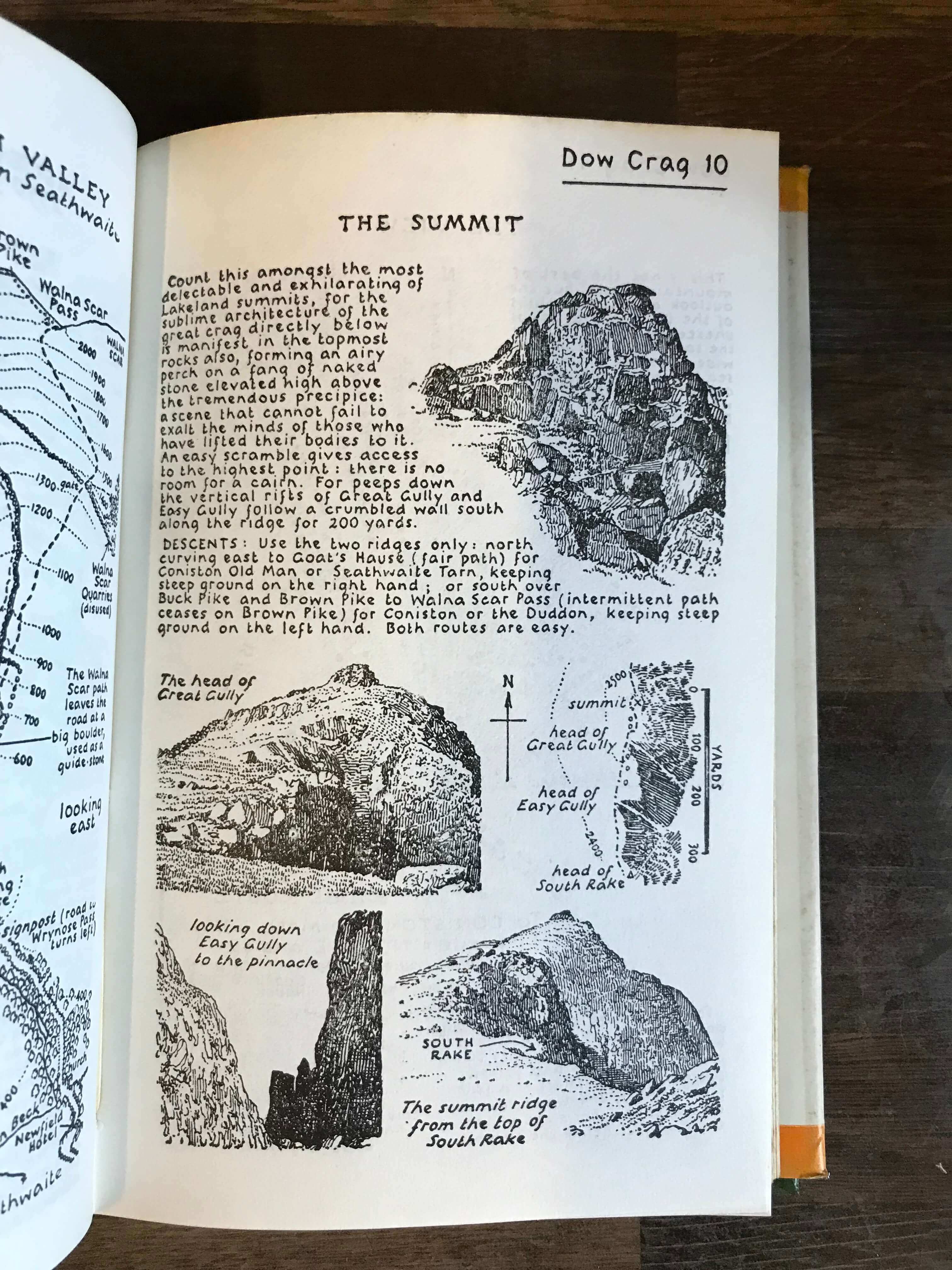
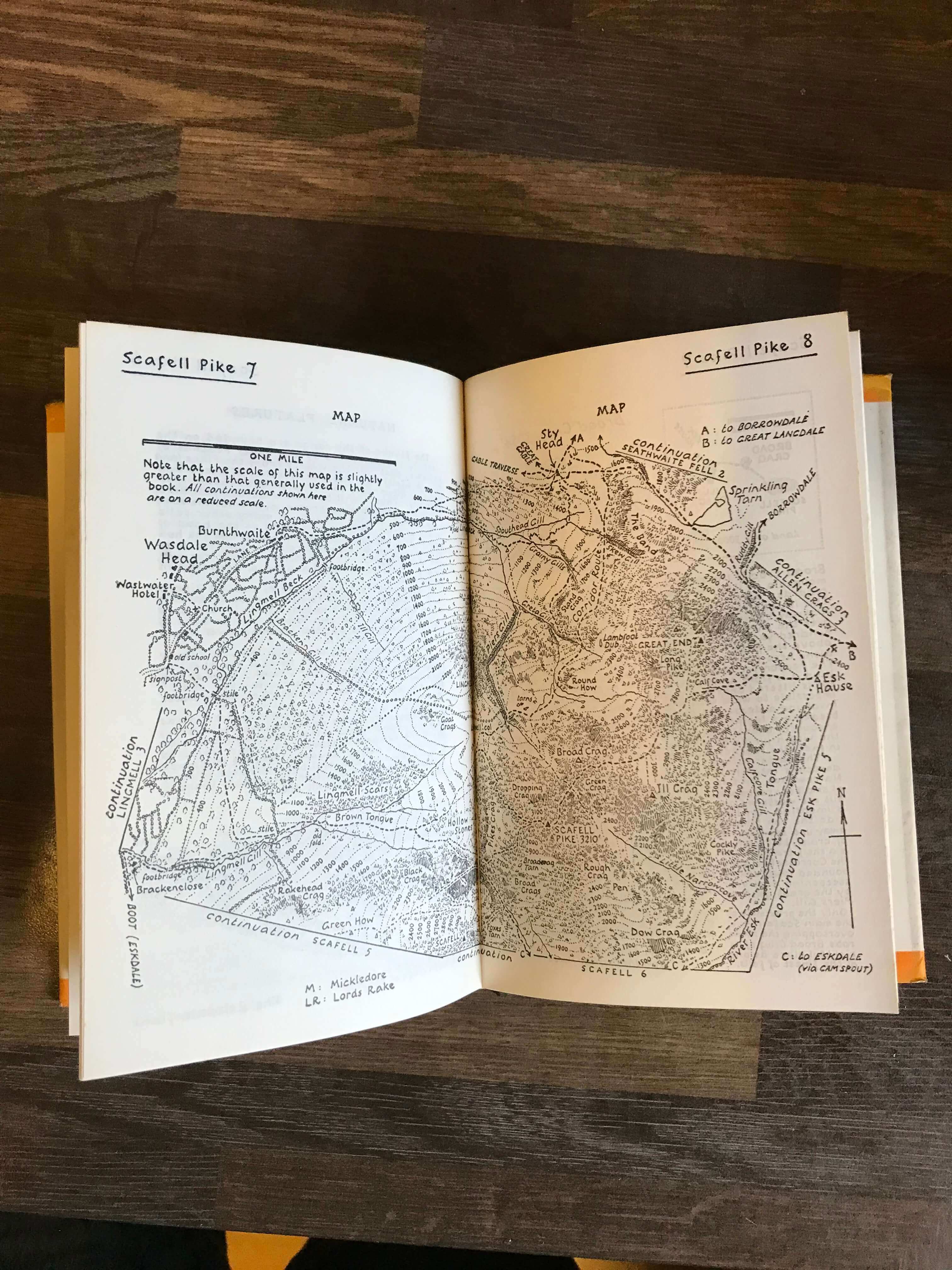
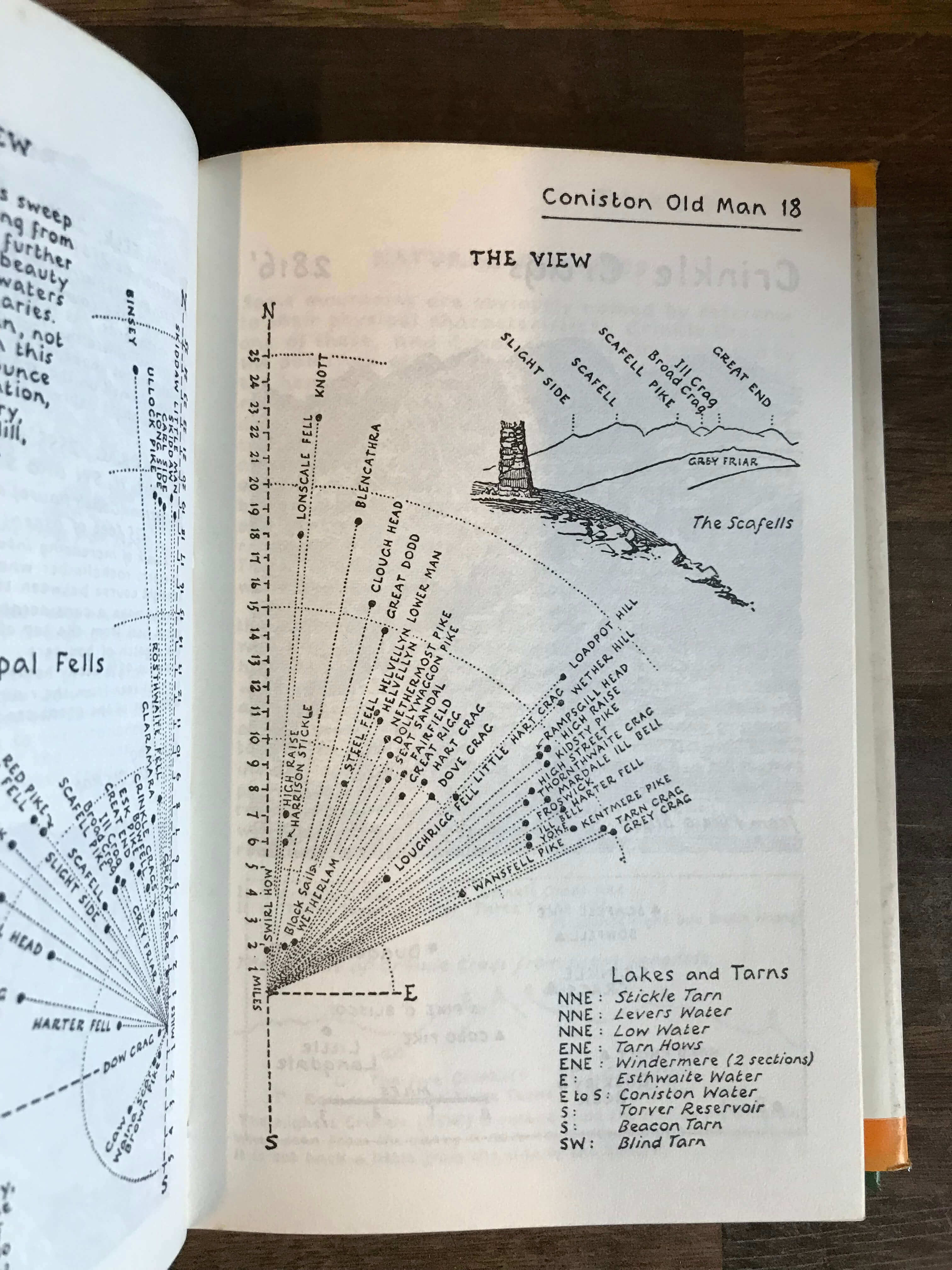
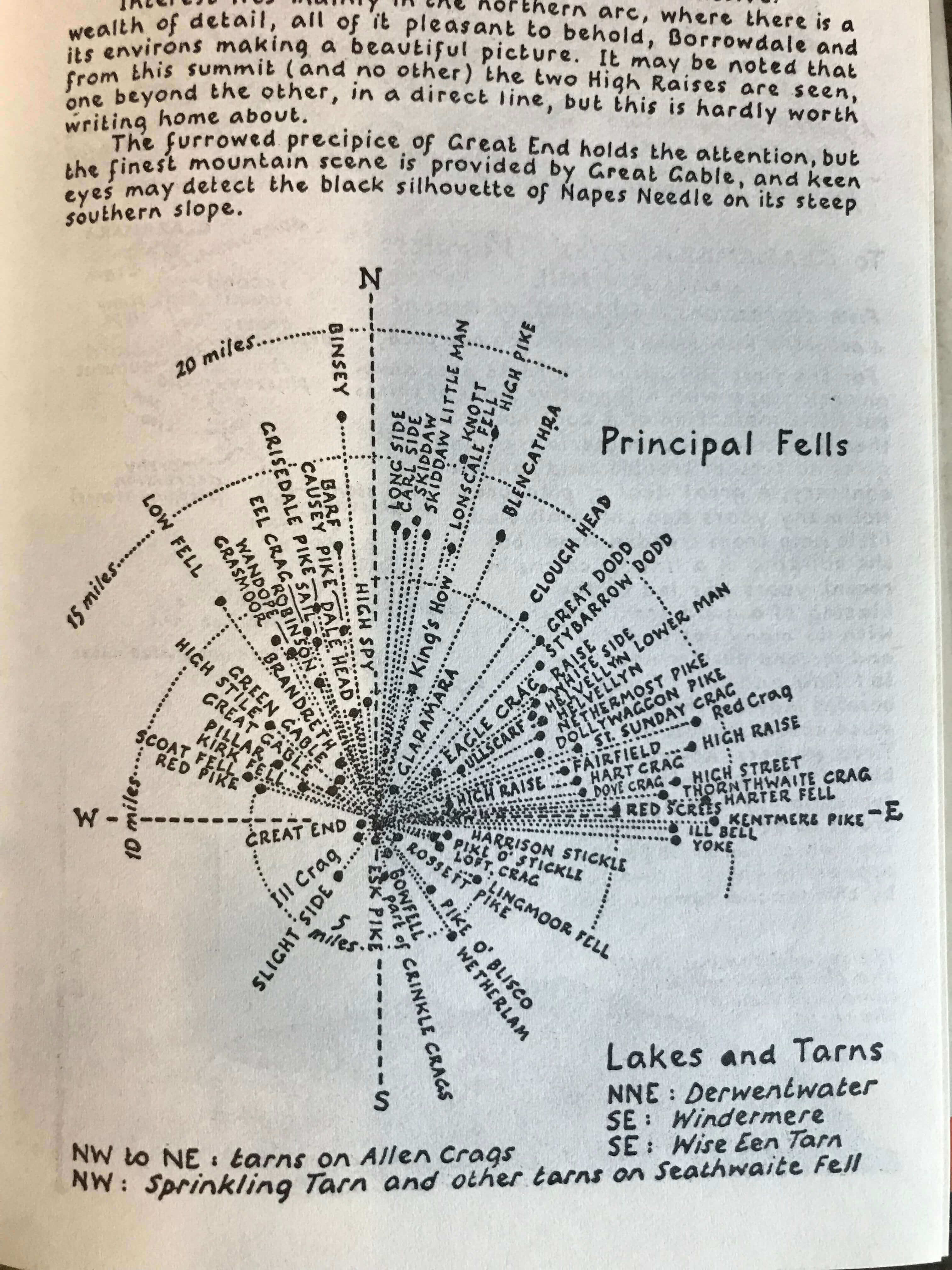
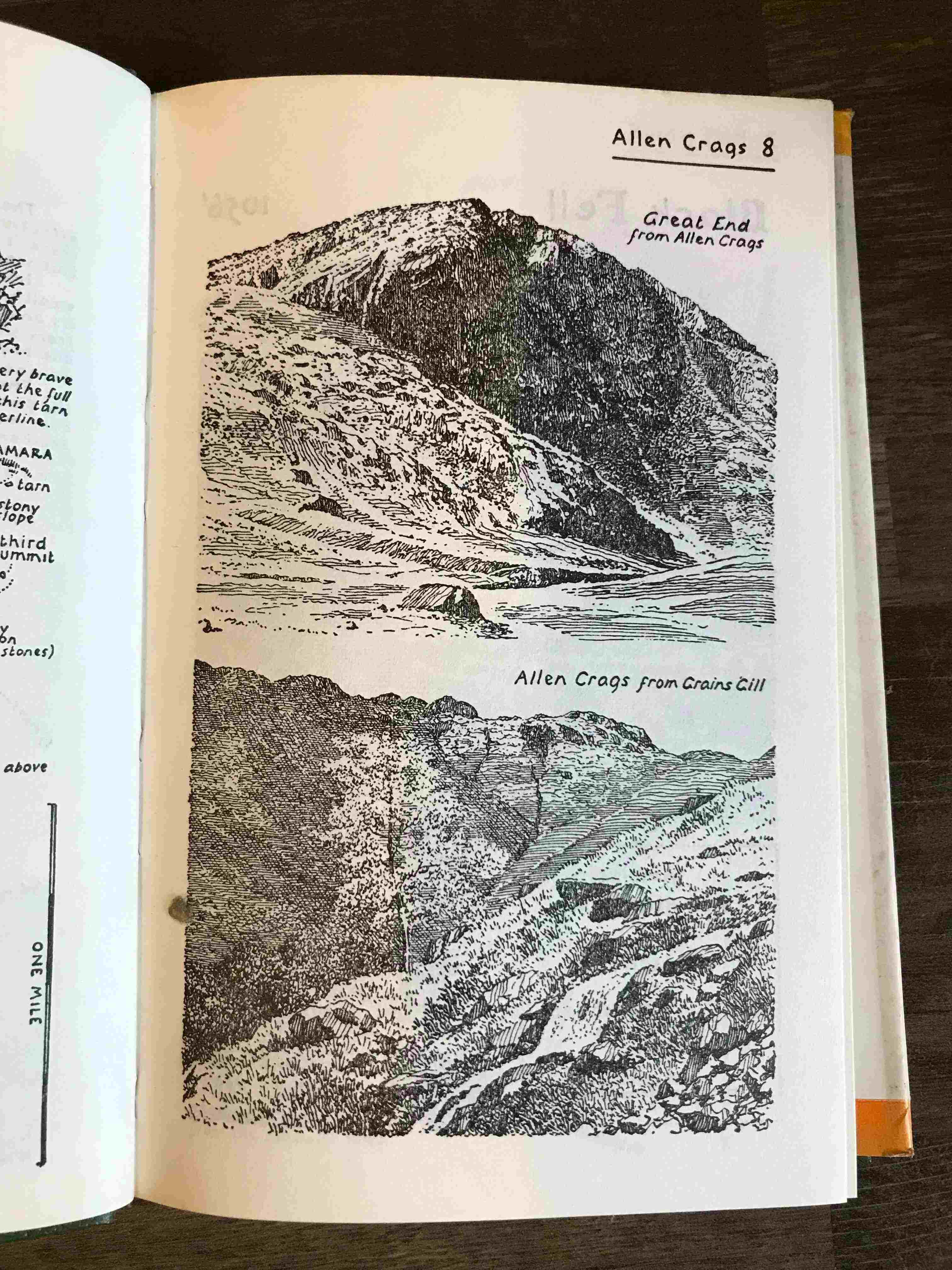
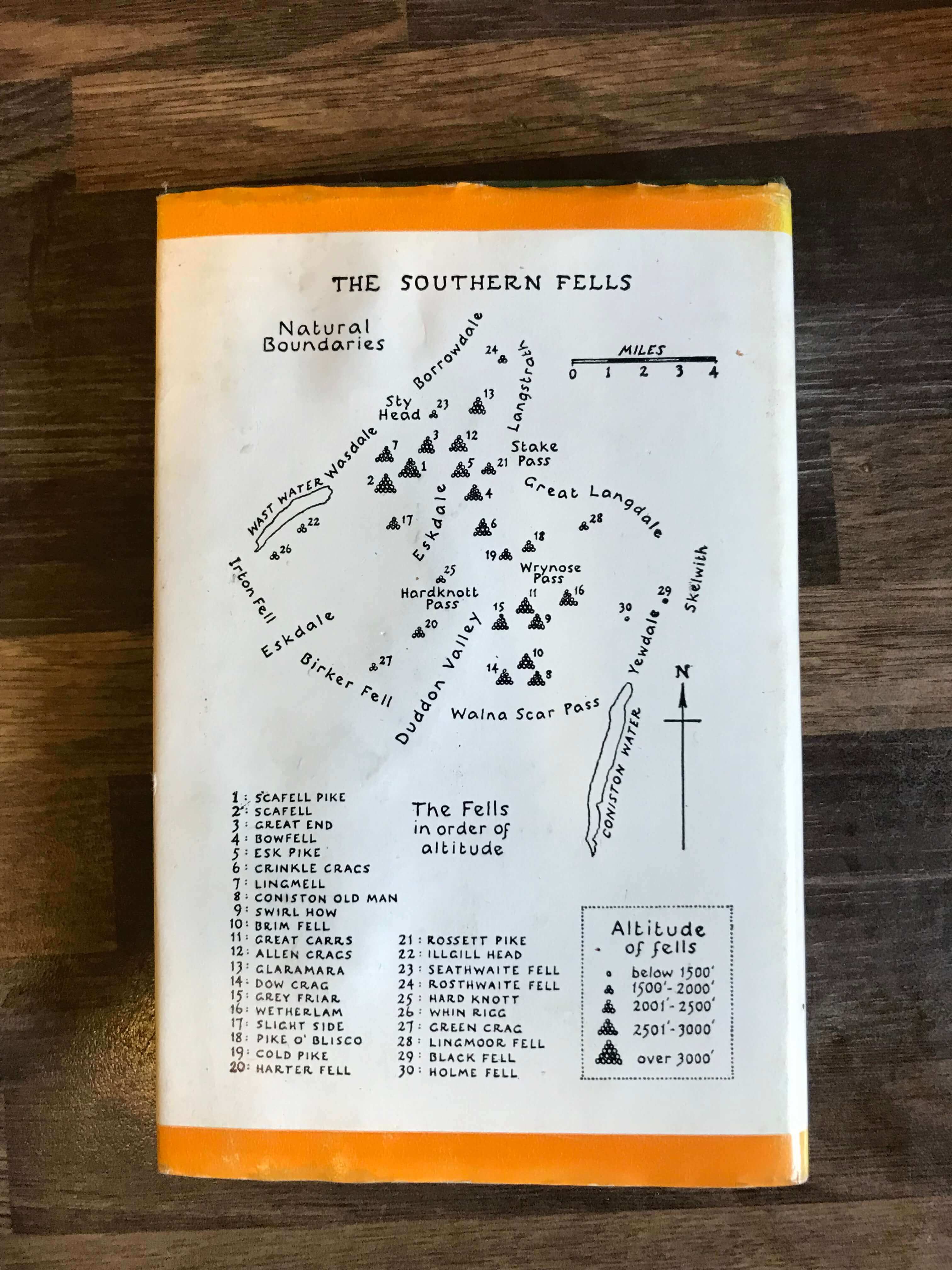
Right, so imagine that across every page of this book. Across all seven books in the series. That’s when you realise the extent of Wainwright’s remorseless commitment to his craft.
The result is truly fascinating.
His chosen walking routes are now slightly different, of course, as in the intervening decades since he wrote the books things have changed. Not just erosion, but new fences and the like.
If you’re interested in these books they’re very much still in print.
The first one launched in 1955 and since then over two million copies have been shifted from bookshelves. In fact, many walkers still think of Wainwright’s mammoth work as the definitive guide to the Lake District.
A fitting tribute to the man indeed.
Mr. Wainwright and How Journalism Runs in My Family
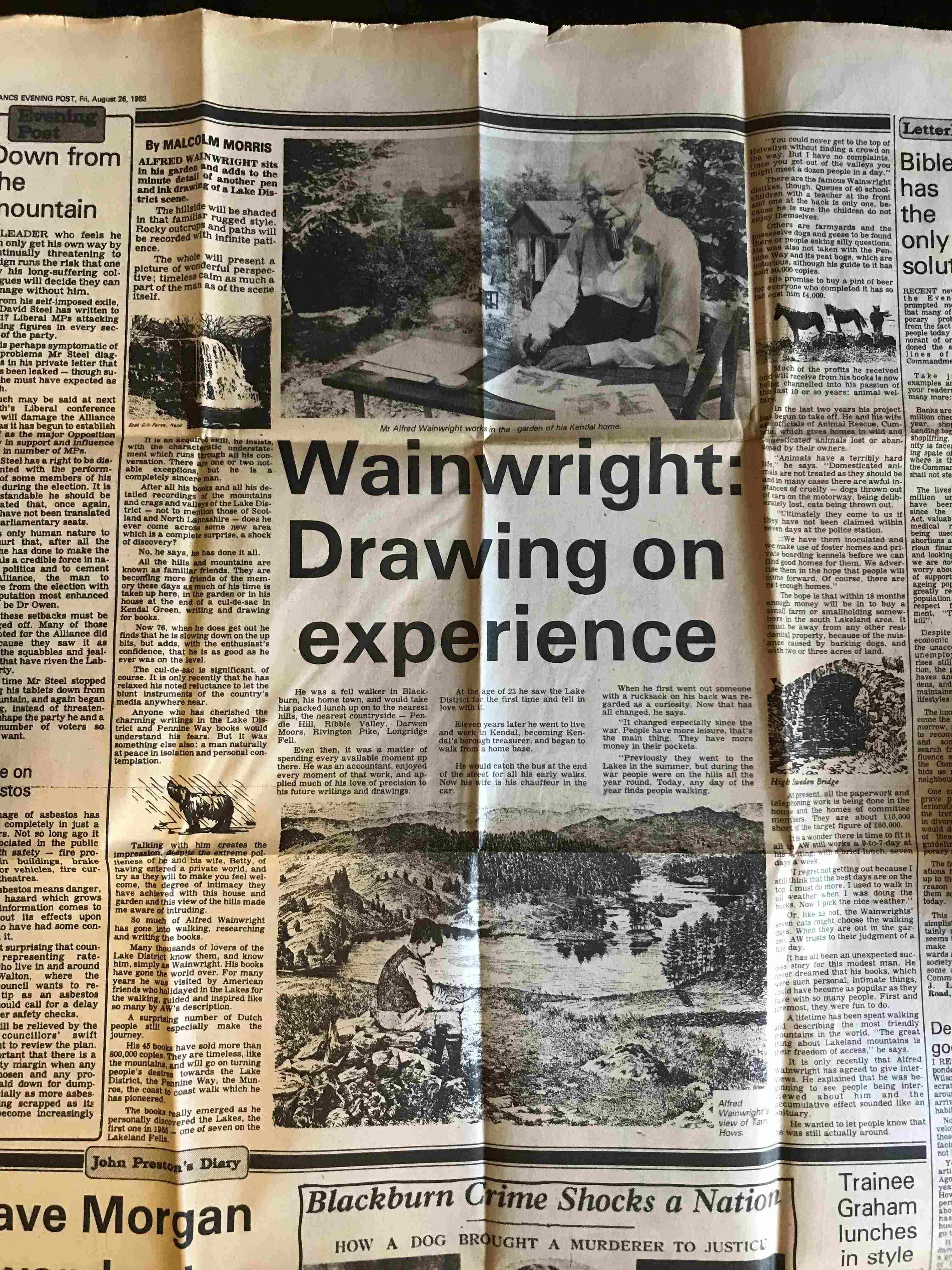
Not that I ever reveal much information about my private life here on Professional Moron, but this book review is a tad different.
Of recent generations, my family is of a journalistic bent.
The Wapojif clan has several journalists at work, something I dabble in from time to time as well. Wapojif Snr. spent his career at it and got to interview many notables over the years. Incuding A. Wainwright, as you can see in the above feature.
From The Lancashire Evening Post dated Friday August 26th, 1983, the article stated:
“Alfred Wainwright sits in his garden and adds to the minute detail of another pen and ink drawing of a Lake District scene. The hillside will be shaded in that familiar rugged style. Rocky outcrops and paths will be recorded with infinite patience. The whole will present a picture of wonderful perspective; timeless calm as much as of the scene itself.
It is an acquired skill, he insists, with the characteristic understatement which runs through all his conversation. There are one or two notable exceptions, but he is a completely sincere man.”
A note, too, on his reclusive ways:
“It is only recently that Alfred Wainwright has agreed to give interviews. He explained that he was beginning to see people being interviewed about him and the accumulative effect sounded like an obituary. He wanted to let people know that he was still actually around.”
Wapojif Snr. noted that Mr. Wainwright was extremely quiet during the interview and it was difficult to get him to say anything (more on this side of the author’s personality further below).
This news item was next to a letter to the editor from a certain J. Loffler, Cromwell Road, Preston. Titled “Bible has the only solution” Mr. Cromwell stated:
“Recent news items in the Evening Post prompted me to reflect that many of our contemporary problems stem from the fact that so many people today are either ignorant of or have abandoned the simple guidelines of the Ten Commandments.”
Thou shalt not steal… we did once accidentally steal a pot of discount houmous from Tesco. It was an accident, but we plead insanity anyway.
Sadly, we feel Mr. Cromwell, if he’s still with us, will be even more miffed off with life in 2023.
A Little Bit About Alfred Wainwright
The above is a Desert Island Discs episode from 1988 with what appears to be quite a rare public appearance from Wainwright. As is clear early on, he was a reclusive soul and enjoyed a lot of solitude.
Born in Blackburn, Lancashire, he was born into a lower-middle class family. He left school at 13 despite doing well, taking up an office job (rare those days in the region). After studying at night school he qualified as an accountant, joining Blackburn Borough Council full-time afterward.
His walking career was more impressive. As a child he’d walk up to 20 miles a day and had an avid interest in cartography.
Aged 23 in 1930 he went for a walking holiday in the Lake District with his cousin… and that was it! Hooked for life.
He married in 1931, but this ended in divorce, before marrying again in 1970 to Betty McNally (1922-2008). From then on, she was his constant walking companion until his death in 1991.
Wainwright’s biographer Richard Else argued he was likely autistic.
Wainwright was stubborn and obsessive with details, rigorously detailing the most minute aspects of the Lake District in relentless fashion. He refused to have work published in anything but his handwriting.
Additionally, he was obsessive over the soap opera Coronation Street and would never miss an episode. In the meantime he survived almost exclusively off a diet of fish & chips, almost only ever ordering from a Little Chef.
The 2017 biography Wainwright revealed argued this, as documented in The Guardian’s feature Alfred Wainwright may have had autism:
“Wainwright’s ‘need for all-enveloping order’ can be seen in his seven-volume masterpiece, A Pictorial Guide to the Lakeland Fells, argues Else. The books follow a distinctly idiosyncratic approach, obsessively cataloguing each fell in a range and listing every ascent, rather than just the most rewarding or easiest. He ranked all aspects of the Lake District, listing not only the best fells and summits and finest ridge walks, but also the best square mile: around Castle Crag in Borrowdale.”
The level of detail in his work reminds us of something such as The Illustrated History of Apples in the United States and Canada (2019). A 30 year odyssey of painstaking research for its author Daniel J. Bussey.
Well, why not? If it’s something you’re passionate about, someone else will be too (and eternally grateful for your efforts).
A. Wainwright (who went some lengths to even hide his first name) was idiosyncratic in his approach. But the result is a masterpiece level of historic detail—the kind of work we doubt would ever be produced again except by someone with a similar type of mind.
Right down to the detail of insisting his handwriting be the form of the work.
Writing a book is never easy, but Wainwright seemed to revel in the intricate challenges his seven tome epic hurled at him. The fact he munched on fish & chips between bouts of walking and documenting is about as British as it gets. Splendid, old bean.

Amazing!
Congrats to Wapojif senior, and to you!
I knew you came from …. well… somewhere.
Anyway, a great article, ‘Oron.
Thank you!
When and where do you get the time to write all these posts?
xxoo
LikeLiked by 1 person
Snot a problem, madam, snot a problem at all.
“When and where do you get the time to write all these posts?”
1 – I get up early.
2 – I’m a writer by trade, yo.
3 – Touch typing helps!
4 – I am a maniac.
LikeLiked by 1 person
#4 sounds good!
Touch typing, eh. I took that.
I got in big trouble when we had to type “duck” over and over, without looking until the page was filled.
Oops! I was “touching” the key to the right, and typed an entire page of _uck!
I was accused of doing it on purpose.
Oh well!
LikeLiked by 1 person
Oh my days, yeah you’ve got to be real careful with duck. I once worked for a digital agency and we entered a charity duck race in Manchester… all marketing materials I was most paranoid over for months of build-up. MONTHS!
LikeLiked by 1 person
I seem to remember a duck race!
Was that you?
LikeLiked by 1 person
I attended the duck race, yeah, although we didn’t win. It were in 2015. Marvellous event.
LikeLiked by 1 person
It sounds…….. unique!
LikeLike
Yeah… I can’t remember the reason for it (other than for charity) but everyone loves a good old fashioned plastic duck, eh? Bet you’ve got one for your bath!
LikeLiked by 1 person