
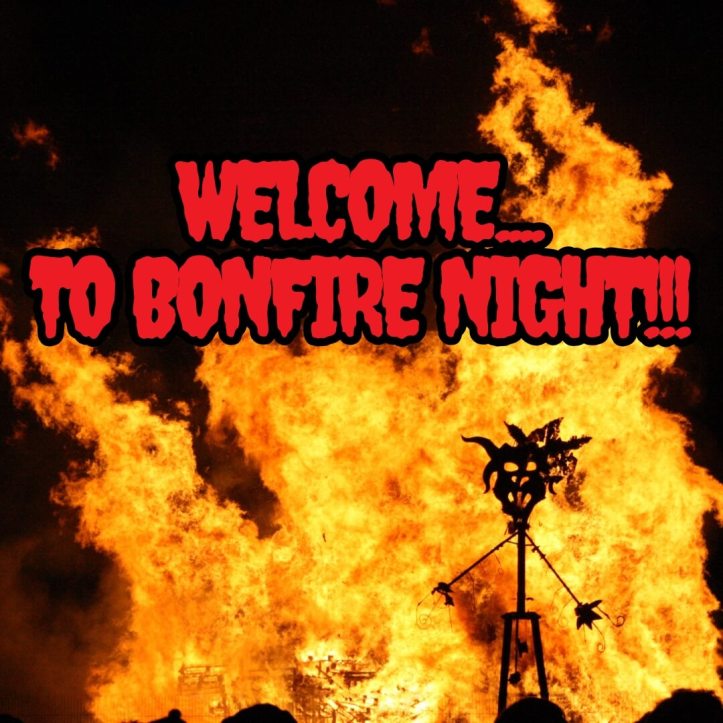
Americans just celebrated Halloween, which until recently wasn’t really a thing in England. Our thing has been Bonfire Night, which has been observed annually since November 5th 1605.
That isn’t a typo. We’ve been doing this thing every year for the last 420 years.
These days it’s mainly an excuse to go out, drink heavily, and set off explosives. But it’s worth looking back at the Gunpower Plot of 1605 and an ambitious attempt at regicide. And we should imagine many attending the explosions tomorrow night will largely have forgotten all about that bit, Guy Fawkes, and his various cohorts.
Bonfire Night in England: Let There Be Explosions
Out of context, it all looks a bit disturbing. Above is a Bonfire Night from November 1961 in Ripley, Surrey. It’s only later on in the footage it stops looking like a far-night book burning purge and you can see people having a fun time, fireworks going off, and a mini theme park.
Here’s another early one, this time in Crystal Palace of the year 1931. According to the video notes, this event had an illuminated tightrope walker, two elephants, and a circus.
As a reminder here, it was Thomas Wintour, Robert Catesby, and Guido (Guy Fawkes) who hatched a plot to blow up King James I via stockpiling gunpowder barrels beneath the House of Lords. An anonymous letter tipped them off and local authorities swooped in at the last moment to stop the assassination.
After the failed Gunpowder Treason Plot, and to celebrate the survival of the King, scumbag commoners were given permission to light bonfires in the street. Under the rule of them being (bloody woke mob ruining everyone’s fun again):
“without any danger or disorder”
In January 1606, King James I then initiated the Observance of 5th November Act, which was enacted by Parliament. Many viewed the King’s survival of not being blown to smithereens as divine intervention, so November 5th became an annual day off as thanksgiving and prayer (just to note, as of 2025 this hasn’t been a public holiday in a long time).
The whole fireworks display thing began in November 1607.
Celebrations that year in Canterbury involved 48kg of gunpower, which were detonated to celebrate the non-detonation of two years earlier. In 1610, that’s when food and drink were added to the occasion, although this was for societal elites only. They also got to enjoy live music, a parade by the militia, and more explosions.
Historical records aren’t clear as to when this was adopted by the general public. But it obviously did happen at some point, with the 2005 work Remember, Remember: A Cultural History of Guy Fawkes Day by J. A. Sharp highlights one event in Dorchester at a Protestant church where there was a sermon followed by bonfires and fireworks.
As for that famous rhyme, that didn’t appear in written records until 1742:
Remember, remember, the fifth of November, Gunpowder Treason and Plot.
Don’t you Remember,
The Fifth of November,
‘Twas Gunpowder Treason Day,
I let off my gun,
And made’em all run.
And Stole all their Bonfire away.
As of 2025, most of the social and political significance of this celebration is lost. Attending a Bonfire Night, as many will this evening across England, it’s more a chance to socialise, blow stuff up, and get a bit drunk.
It was a big deal for the Wapojif clan when we were younger and we made a party of it. The full works:
- Bonfire
- BURNING A GUY FAWKES EFFIGY!!! (more on that further below)
- Fireworks
- Food
- Drink (for the parents and adult guests)
Here’s an example from circa 1990. Mr. Wapojif is the one in the red wellies.
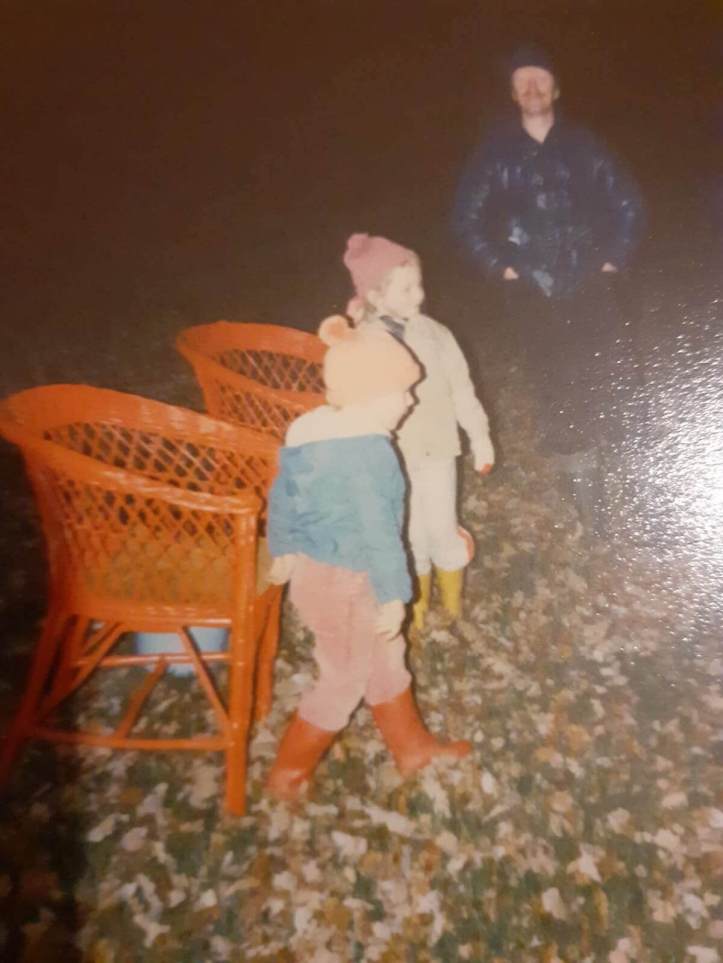
Everything went without a hitch there. Stuff was burned, things were blown up, and all was defended in the fine land of England. 🎇
Addendum: The Whole Burning Effigies of Guy Fawkes Thing
The people of Lewes, East Sussex, take this bit very seriously.
As kids, this was the best bit of the whole experience. A tradition (quite a psychotic one, really) is still to dress up a Guy Fawkes effigy using trousers and a jumper, stuff that with newspapers, and affix a head on top of the body.
When the bonfire is lit, it’s then customary to HURL the Fawkes effigy onto the fire and WATCH IT BURN!!! Take that, you traitorous bastard!
From our research, this wasn’t an immediate thing after 1605. Once it became the social norm to burn bonfires (by circa 1650), from around 1673 some bright spark decided to create this figure and have it burned on a fire.
Fawkes was, of course, sentenced to be hung, drawn, and quartered. He managed to avoid most of that, though, as on the day of his execution (31st January 1606) he jumped from the ladder on his way up to the hanging gallows and broke his neck. This means he got to miss the worst of his execution.
Cheerful stuff, then! And this is what, we here in England, celebrate every year. And have done for over 400 years.
Traditions can be weird, all right, but the resonance of this one has faded in time to become more of a social gathering to enjoy a fire and see some pretty fireworks. Cheers, Guido Fawkes! It’s been memorable.
