
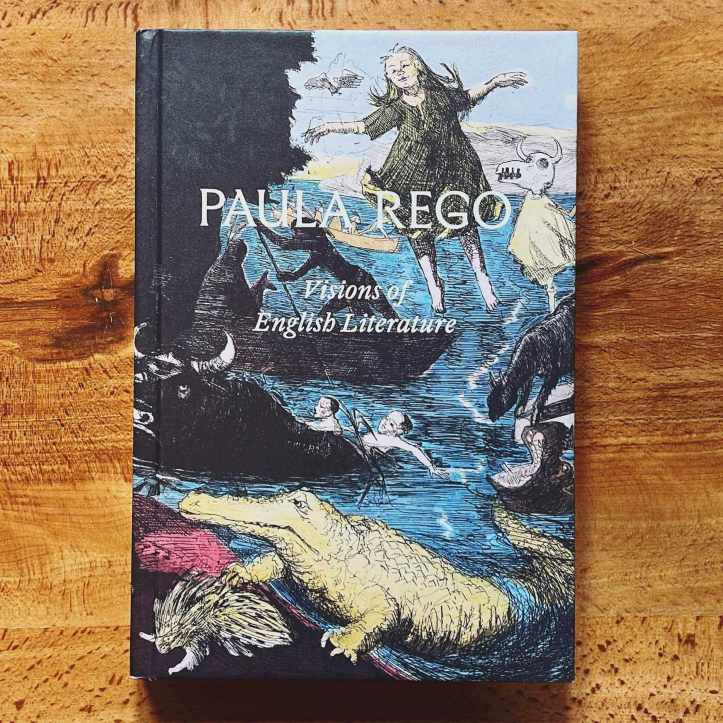
This gorgeous artbook is about Portuguese visual artist Paula Rego (1935-2022) and her impressive body of work. Rego is still considered one of the leading female artists of the 20th century, with a major focus on paintings and storybooks.
Visions of English Literature just published in October 2025, a celebration of her work across some classics of literature. That includes Peter Pan, Jane Eyre, and various nursery rhymes.
Her work is packed full of themes such as power, status, female agency, and social injustice. A lot of it is faintly disturbing, with memorable imagery that brought many books to life. We’re exploring all that below, plus the various essays included within the book.
A Literary Exploration of Paula Rego’s Artistic Canon
“A constant refrain in Paula Rego’s conversation through the whole of her long and endlessly inventive working life was her need for stories and poetic imagery that would inspire her narrative-based picture-making. They figured in every medium that she explored, from painting, drawing, and printmaking to the large-scale pastel works that provided a late-career climax in the fire first decade of the twenty-first century, magnificent tableaux in which sculptural figures interacted with real human beings.”
The pictures we’ve added here really don’t do justice to what a fantastic artbook this is. Paula Rego: Visions of English Literature will have a front and foremost spot on our bookshelf somewhere, it’s just a charming book to leaf through.
But for the record, below are some of the images within its pages.
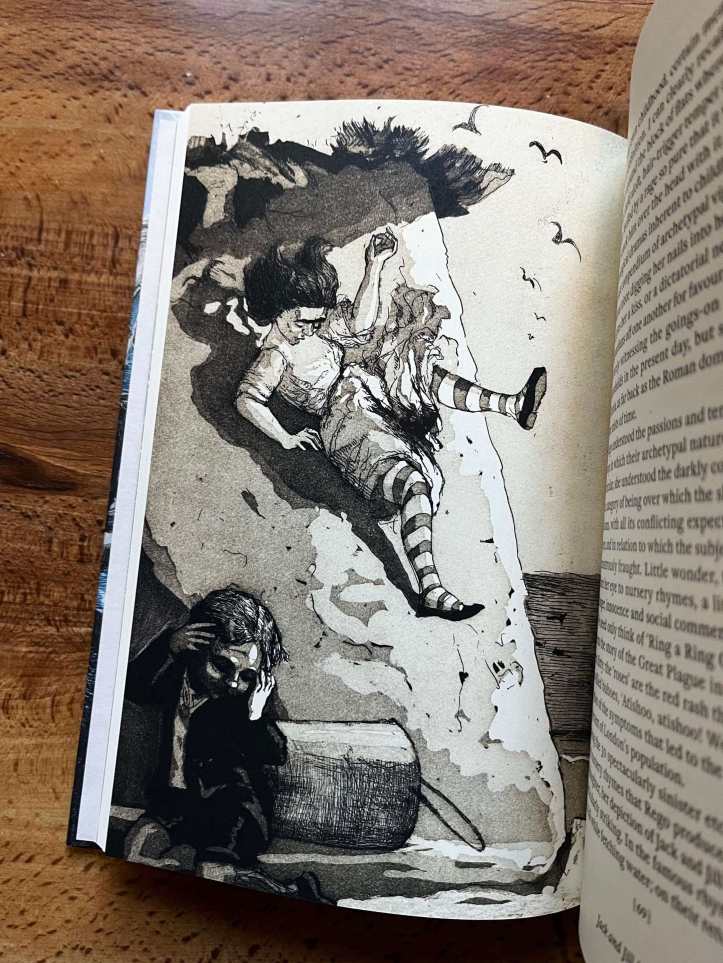
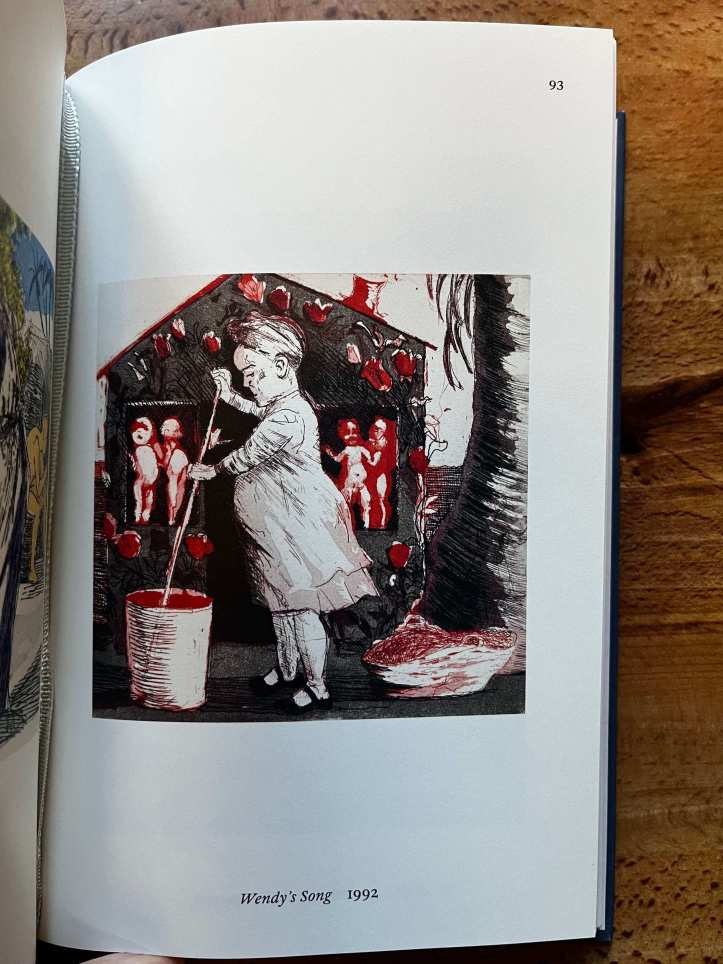
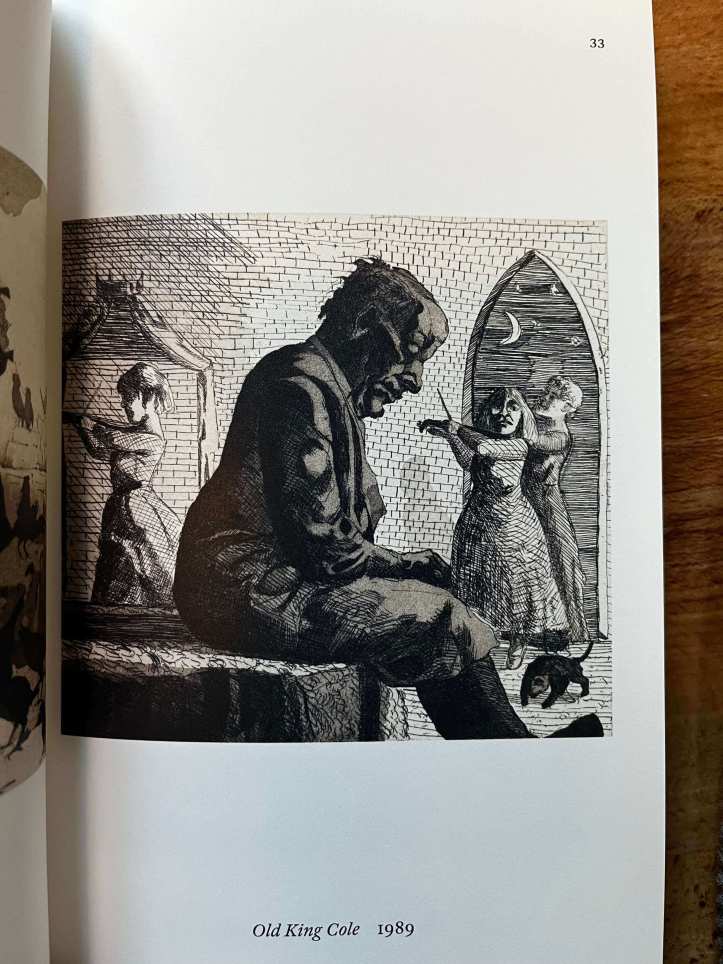
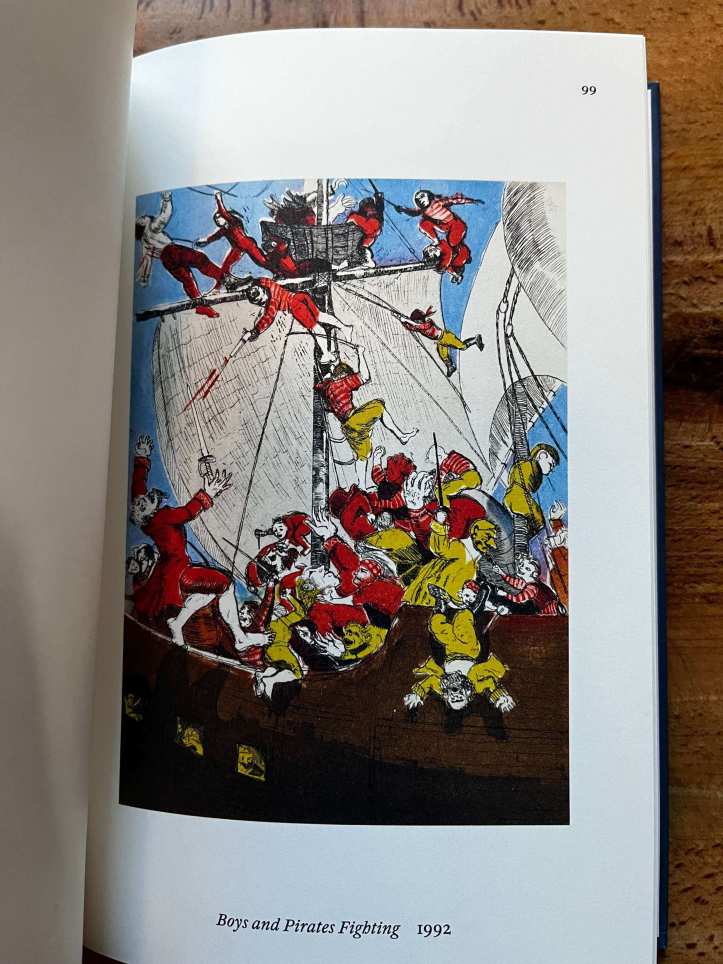
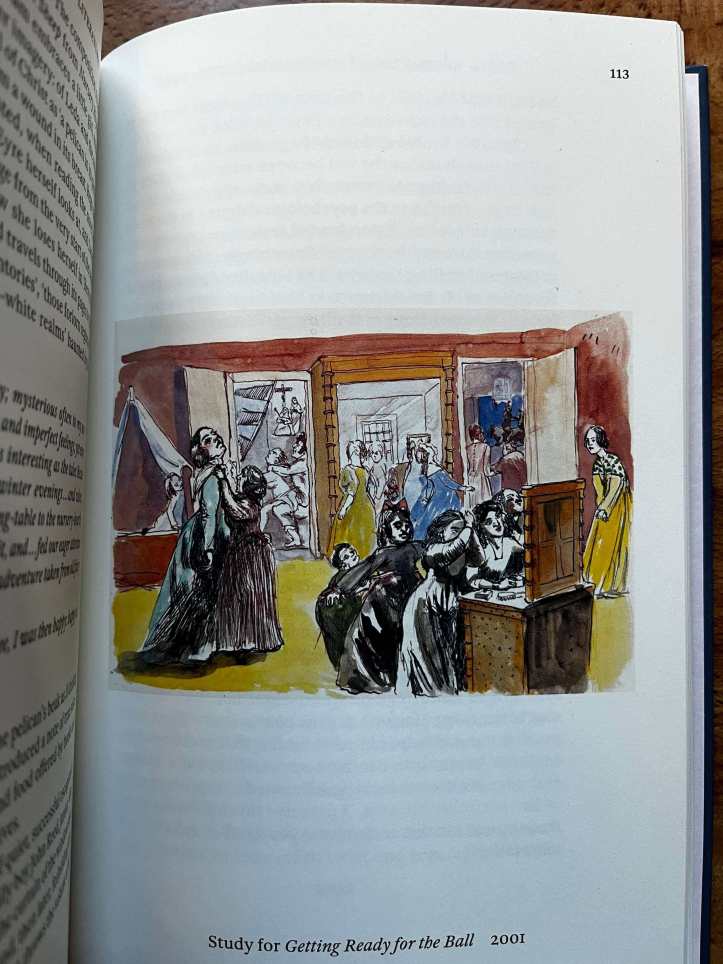
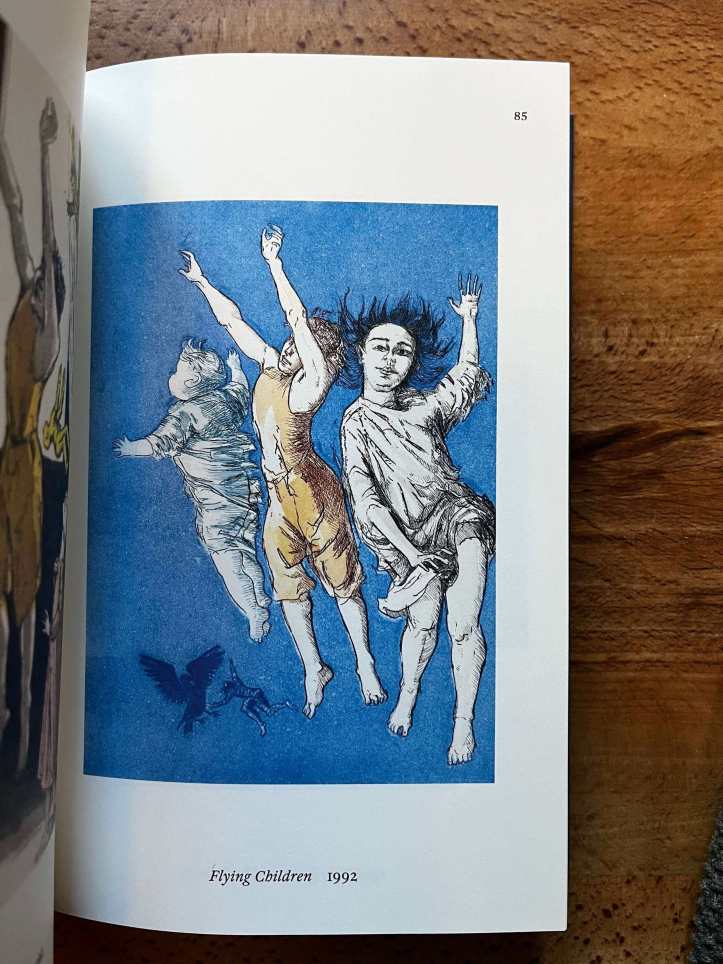
The work is mainly dedicated to Rego’s art, which makes up for most of the content. But there are also some essays to go with everything. Including:
- Girl Reading: English Literature Through the Eyes of Paula Rego by Marco Livingstone
- The Dangers of Innocence by Rosanna McLaughlin
- Jane Eye Through Paula Rego’s Eyes by Marina Warner
An intriguing element in Rego’s work is this was someone from Portugal taking a keen interest in English literature. And her take on these famous works feels definitive. But if someone disagrees with that, you can’t argue that Rego’s artistic style is enormously distinctive.
Again, faintly disturbing. Depicting characters involved in traumatic situations or dealing with menacing looking characters.
An example work is Peter Pan; or, The Boy Who Wouldn’t Grow Up (1904). It was written by Scottish novelist J. M. Barrie (1860-1937) and first launched as a play. In 1911 he turned it into a novel, which he called Peter and Wendy. Visions of English Literature has a foreword that documents Rego’s take:
“In her haunting etchings and aquatints of scenes from J.M. Barrie’s Peter Pan she draws out the anguish, weirdness, and horror inherent in the adventures of the boy who will never grow up or die, simultaneously capturing the terror and potency of Wendy’s sexual awakening as she is pulled between childhood’s freedom and adult responsibility.”
Whereas in Jane Eyre, Rego turned her focus to page dominating lithographs packed with repression, rage, menace, and all sorts of other haunting visions.
We get the feeling her work would be considered too dark for modern kids. In the same way that Richard Adams’ Watership Down (1972) is thought of as too dark (with the author noting that himself), before a 1978 film that also continues to terrify kids.
Rego wasn’t interested in cutesy interpretations, she went all out with metaphysical horror, body horror (in some respects), and nods to sexual awakenings or perversions.
In Rosanna McLaughlin’s essay Dangers of Innocence she writes:
“Paula Rego understood the passions and tensions of youth and the ways in which their archetypal nature lends itself to art. In particular, she understood the darkly complex world of girlhood: a category of being over which the shadow of womanhood looms, with all its conflicting expectations, desires and dangers, and in relation to which the subject of innocence can be monstrously fraught. Little wonder, then, that Rego should turn her eye to nursery rhymes, a literary canon in which danger, innocence, and social commentary go hand in glove. We need only think of Ring a Ring O’ Roses, which transforms the story of the Great Plague into an ostensibly innocent ditty: the ‘roses’ are the red rash that accompanied the pus-filled buboes, ‘Atishoo, atishoo! We all fall down’ a description of the symptoms that led to the agonising death of 20 percent of London’s population.”
Rego completed many of these drawings circa 1990, such as her work for Jack and Jill (1989). The sinister undertones of these are quite startling even for us, looking on as battle-hardened adults into our 40s.
It’s like she saw in these literary classics, often presented as delightful or twee by other artists, the hidden depravity of the human condition. That Peter Pan actually is a pretty horrible concept, with the mischievous lad doomed to an eternity as his petulant self. And some nursery rhymes are pretty grim, when you think about them.
We can rave about this book plenty more, the little hardback edition we picked up an artistic treasure, but it’s also important to understand the woman behind it.
The Creative World of Paula Rego
As you can see from her above interview, Rego put a lot of thought into her creative process. Feminism is a part of her work, including folky themes and influences from Portugal, but she lived in London and produced all her work there.
Here’s another extract from Rosanna McLaughlin’s essay Dangers of Innocence.
“While Rego’s art can certainly be read through a feminist lens, it would be wrong to see it as offering anything akin to to a clear-cut lesson in morality. The extraordinary psychological charge that is the hallmark of Rego’s art is produced by its often profound ambivalence and amorality, qualities that surface is the delight that she clearly took in dancing with debasement.”
Rego was born in January 1935 in Lisbon. Her father was an electrical engineer and an anti-fascist. Her mother was an artist. From 1951, Rego and her family lived in the UK and she went on to study at Slade School of Fine Art in London (1952-1956).
Whilst developing her art career, she was an ardent women’s right and abortion rights activist. Perhaps due to these societal injustices, she battled mental health issues. She told The Guardian in a 2015 interview (Painting is not a career. It’s an inspiration):
“Sometimes I get depressed. I’ve had bad depressions. In the 60s, when I was very bad, Vic called the doctor and he came to the house. The doctor referred me to a therapist – a Jungian. I’ve had other depressions since. Last time was in 2006. Work helps but when you are depressed you don’t know what to do. I once got some long ribbons of yellow silk and tied up Lila [Rego’s muse, model and friend since 1985] really tight with big bows and then drew her. That’s the feeling of it: all tied up, unable to move. I made one of those drawings into a Christmas card. The Jungian therapy I have undertaken has helped my art. It has liberated it.”
She worked steadily across the 1960s and 1970s gradually building her reputation, but it wasn’t until the late 1980s and early 1990s. The National Gallery in London gave her an artist-in-residence spot and from that came her nursery rhyme pieces.
That’s what really set her career in the ascendancy, as the Arts Council of Great Britain toured those images around the country from 1991 to 1996.
We look at her canon of work now and see constant creativity.
She never did stop, only ever adapting as she got older, turning her focus to new things. But it’s in Visions of English Literature we can see her honesty, and ability, to depict difficult subject matter. She didn’t shy away from showing true meaning, which we think is a big part of her lasting artistic legacy.
