

Okay, we’ve re-written a bunch of our old book reviews from nine years ago (repurposing, as the lingo goes). As they were rubbish. And our content writing skills have advanced a bit since 2015.
We actually started doing these book reviews in December 2014. We remember the moment as if it was yesterday (it wasn’t, it was nine years ago).
But here we are now! Older, wiser, and balder (us, not the books). Take your pick and enjoy reading them. Or else.
Old Book Reviews Made New
Okay, no real need for this section. It’s just here to make a pleasant segue from the above header to the first book on our list. Neat, eh?
The Last Shots

You’ve probably not heard of Yuri Bondarev, but his WWII book The Last Shots (1959) should be viewed as a literary classic. It’s a great novella, based on his experiences in the war.
There’s no fancy philosophical considerations, it’s simply a work deeply embedded in humanity. It’s a story of two young Russians who fall in love during wartime.
Bondarev’s prose is lively and timeless, providing a sense of modernity despite the passage of time. We first read it 20 years ago and it’s stuck with us ever since, although sadly it doesn’t appear to be in print in many countries.
All Quiet on the Western Front

Erich Maria Remarque’s incredible WWI novel is a timeless classic. All Quiet on the Western Front (1929) was despised by Adolf Hitler as it took a clear anti-war stance.
It was burned in the Nazi culture purges, which sought to wipe out anything relating to progressive thought. That’s Jewish values, communism, socialism etc. Worth keeping in mind for those people these days insisting the Nazis were liberals/leftist.
Away from that far-right fascism, Remarque’s book is still a remarkable book. And a very tragic story of the men lost to one of the most senseless wars imaginable.
Storm of Steel
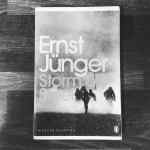
Ernst Jünger’s Storm of Steel was popular with Hitler thanks to his perceived sense of heroic nationalism. But you can read the book in more ways than that.
Storm of Steel is ambiguous in its narrative.
It tells the story of Germany in WWI and it’s not negative, or positive, towards the carnage that plays out. Jünger was injured so many times it defies belief, but he survived and was a war hero in the aftermath of the work’s publication.
Empire of the Sun

J. G. Ballard’s brilliant novel played on his childhood experience in Asia during WWII. The result was Empire of the Sun (1984), which was also adapted into Steven Spielberg’s underrated gem of a film.
The book has a grittier narrative, following a young boy as he battles to survive in a Japanese POW camp.
We love the film as well, it’s arguably Spielberg’s best work. But the book has a different quality that still needs celebrating, not least as it marked a change from Ballard’s normal science fiction angle.
One Flew Over the Cuckoo’s Nest

Ken Kesey’s magnificent debut novel, One Flew Over the Cuckoo’s Nest (1962) is a timeless classic. Although the brilliant 1975 film usually gets all the limelight, you can’t downplay the novel’s importance.
Particularly these days with all the focus on mental health, and greater understanding of mental illness, the work really stands out.
With its themes of individualism and sanity, it’s quite the different experience to the film. So, read this one to experience the best of both worlds.
A Personal Matter
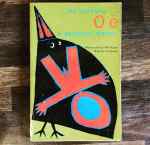
A short novella by Nobel prize winning writer Kenzaburō Ōe, A Personal Matter (1964) is a semi-autobiographical work. It follows the experiences of a young man whose son is born with a serious medical issue.
This happened to Ōe, whose son Hikari is severely autistic and largely non-verbal. Yet is a savant and possesses borderline genius musical abilities.
The book covers the central character’s stumbling considerations on what to do with his son, which makes it a bleak work. One that’s unflinching in its honesty. But it’s an excellent read and marked Ōe out as a young star in ’60s Japanese literature.
Three Tales

Gustave Flaubert’s final significant work before his death, Three Tales (1877) consists of three short stories. These are A Simple Heart, The Legend of Saint Julian the Hospitalier, and Hérodias.
The first story makes it worthwhile alone and could have been released by itself. It still would’ve been a masterpiece, following the life of a simple-minded young servant.
This work helped confirm Flaubert’s status as one of the greats of his era.
The Man Who Mistook His Wife for a Hat

Dr. Oliver Sack’s most famous work, The Man Who Mistook His Wife for a Hat (1985) offers many iconic neurological case studies.
Reading this work, you’ll come across individuals stricken with some of the most bizarre issues imaginable. From visual agnosia to a women who’s body just stopped working, resulting in her needing to use her eyes to direct her limbs.
It’s an incredible book. Our understanding of these issues is now much better, but Sacks’ compassionate telling of them remains one of the medical world’s most important works.
Blood & Guts: A Short History of Medicine
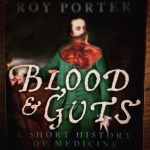
This is a strangely cheerful one. Roy Porter’s Blood and Guts (2002) is a fascinating insight into the way the medical world has evolved.
Porter’s tone across the work, depicting much carnage from the world of disease and medical mismanagement, is strangely upbeat.
Primarily as it leads to the modern world where we have such excellent service. But the book will make you glad as all hell we’re here now, rather than 150 years ago. Because things back then were crap. To put it mildly.
Post Office

Vulgar, stupid, daft, deadbeat, and very funny. Charles Bukowski’s Post Office (1971) is as lowlife as it gets.
Yet Bukowski had a brilliant capacity to just nail a sardonic wit and bask in the joys of the leery nature of his existence.
His alter-ego, Henry Chinaski, is a stick-it-to-the-man wit and one millions of key workers across the world can still identify with.
