
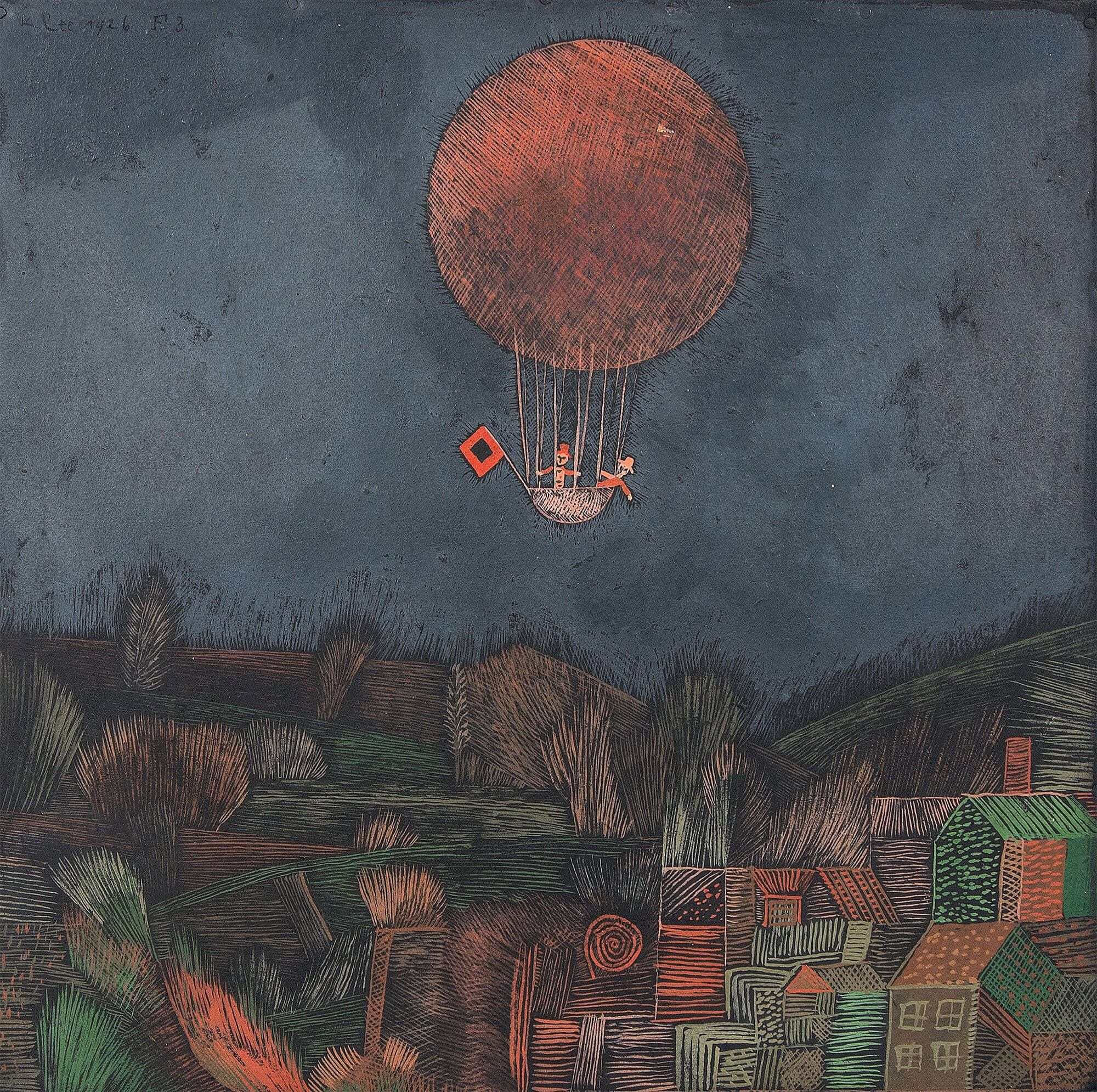
This is The Balloon (Der Luftballon) by Swiss-born German artist Paul Klee (1879-1940). The piece is from 1926—something about it stood out for us. It feels rather modern, yet is almost 100 years old.
We couldn’t out much about this piece and, in fact, Klee has other hot air balloon paintings that are more famous than the above.
Klee’s career spanned several decades and covered abstractionism, cubism, expressionism, surrealism, and all that jazz. Once we delved further into his work we discovered a man steeped in a clinical approach to his art, which resulted in a curious array of distorted shapes and colours. Rather!
Klee’s Theoretical Approach to Art, Colour, Life, and Shapes
Klee’s peer was abstract legend Wassily Kandinsky. They both taught together at the legendary Bauhaus school of art. As you can discover above, Klee was very particular in how he went about his work, treating each work as if it was a musical composition.
Kandinsky, meanwhile, had the perceptual condition synaesthesia so he could hear colours (and when he heard sounds, he saw colours). Both of these two must have been a hell of lecturing combo!
Whilst we prefer Kandinsky’s work, we must also note the intriguing efforts of Klee.
Later in his career he fashioned anti-fascist artwork such as Revolution des Viadukts (Revolution of the Viadukt), which was a piece from 1937. Other pieces, such as Zeichen in Gelb (1937) show he’d gone full abstract in the closing years of his life.

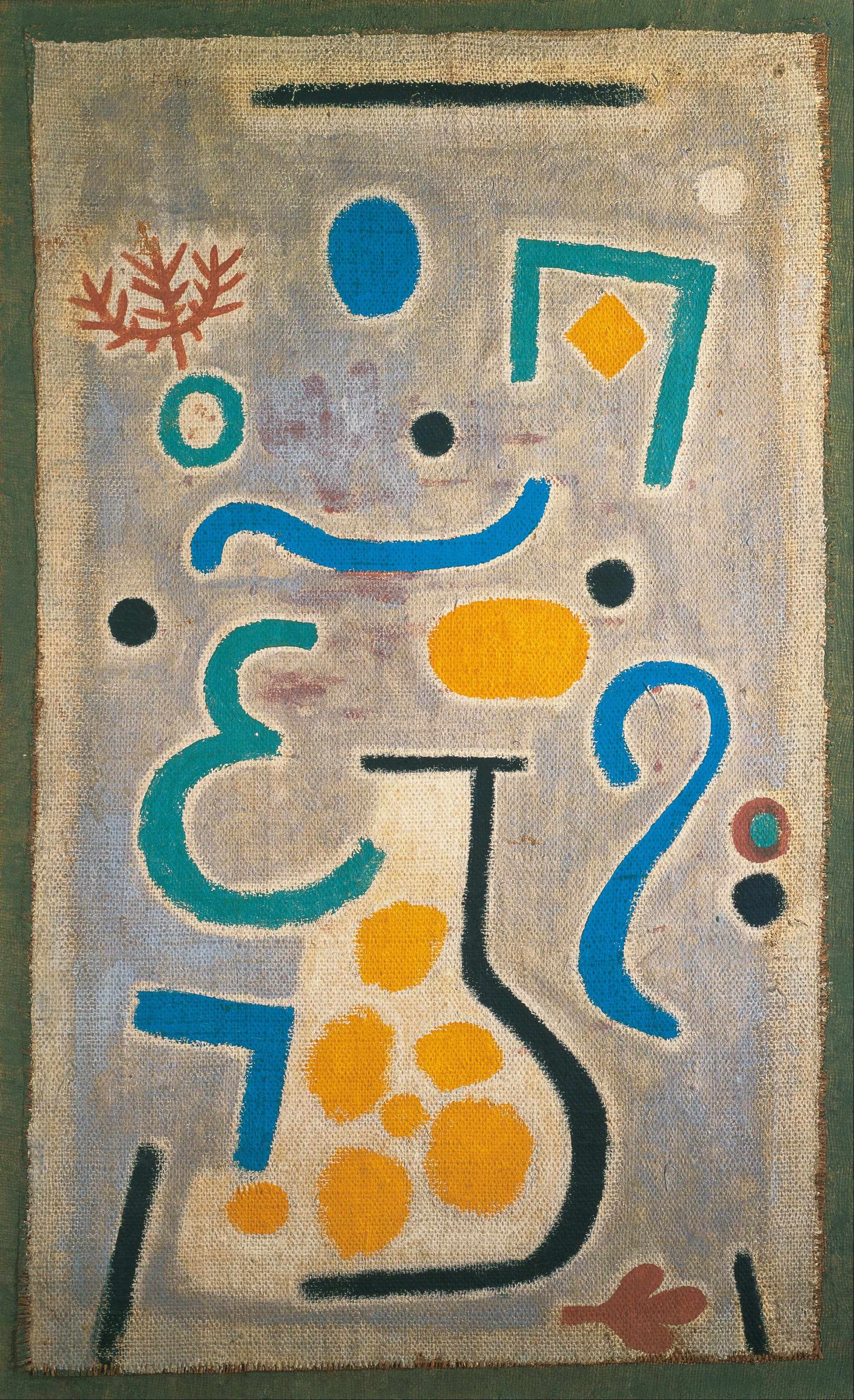
And then there’s Die Vase from 1938. An oil on jute, it’s curiously cut back—not much going on, yet still eye-catching.
Klee had fought in WWI as a foot soldier, during which time he painted constantly. But two of his artistic friends, August Macke and Franz Marc, died during battle—this affected Klee very badly.
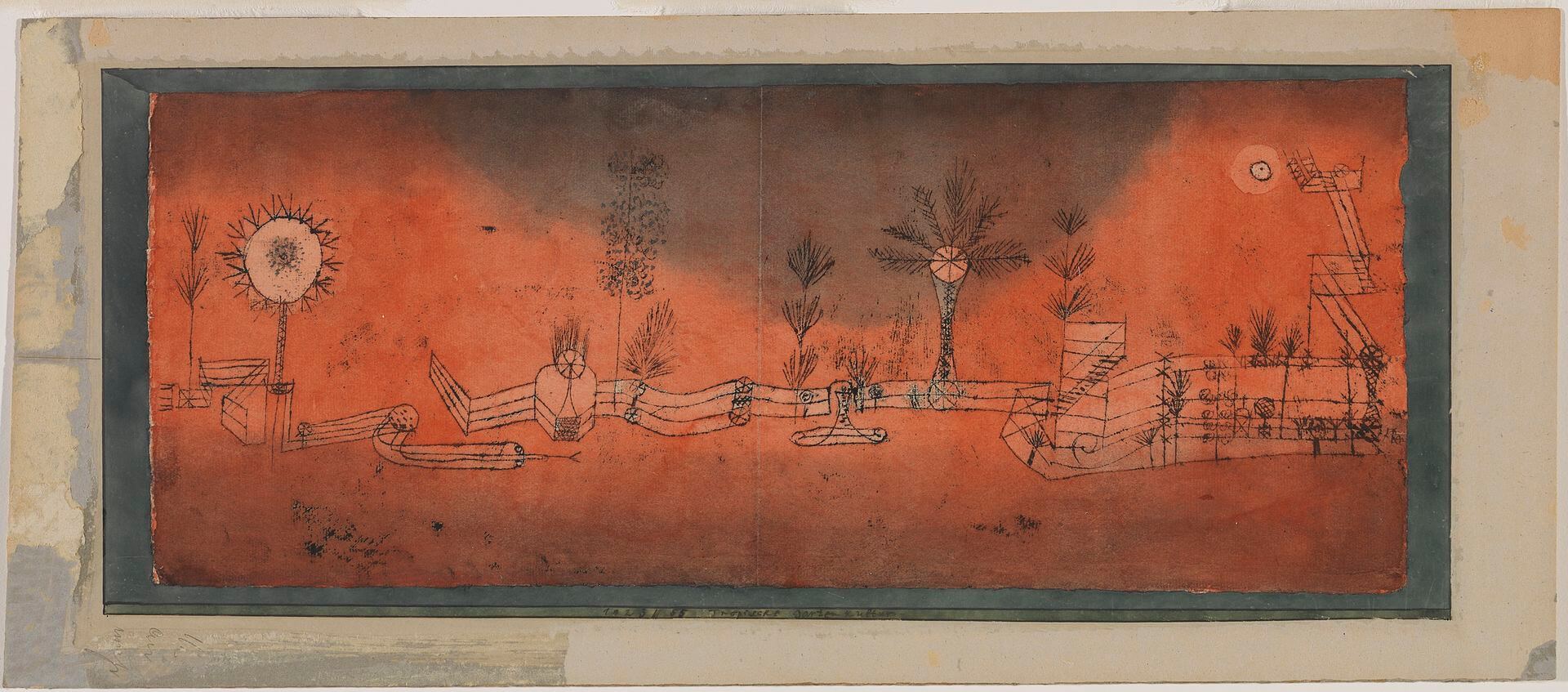
This came across in some of his post-war pieces such as Tropical Gardening (1923).
Whilst painting all of these Klee was busy teaching and theorising, with lectures including Schriften zur Form und Gestaltungslehre.
These were published into English from 1956 as Paul Klee Notebooks. The work is basically a thesis on design principles and was widely celebrated at the time.
It’s got gems of insights such as this:
“One eye sees, the other feels. A single day is enough to make us a little larger or, another time, a little smaller. A line is a dot that went for a walk.”
And:
“A line is a dot that went for a walk.”
3,000+ pages of his personal notebooks are online for free, as taken from his Bauhaus lessons from 1921-1931. You can explore them here: Artistic form and design theory.
This is all fantastic art in its own right, packed full of colour and postulations (in German, of course).

This was a man whose life was one long creative experiment. Painting whilst being bombed and shot at during WWI, then heading into full-time work, getting married, fashioning many hand puppets to entertain his son etc.
On the puppets, have a read of Open Culture’s The Hand Puppets That Bauhaus Artist Paul Klee Made.
And this is what we love about the online era. We happened across Der Luftballon during the week after scouring Instagram, did some research, and that led us off down this merry path of discovery. There we go then. The internet isn’t all bad, eh?

3000 notebooks? Man, I thought I was doing well with my 30!
LikeLiked by 1 person
Typo there (now corrected)! 3,000 page notebook. Still impressive in its own right.
LikeLiked by 1 person