
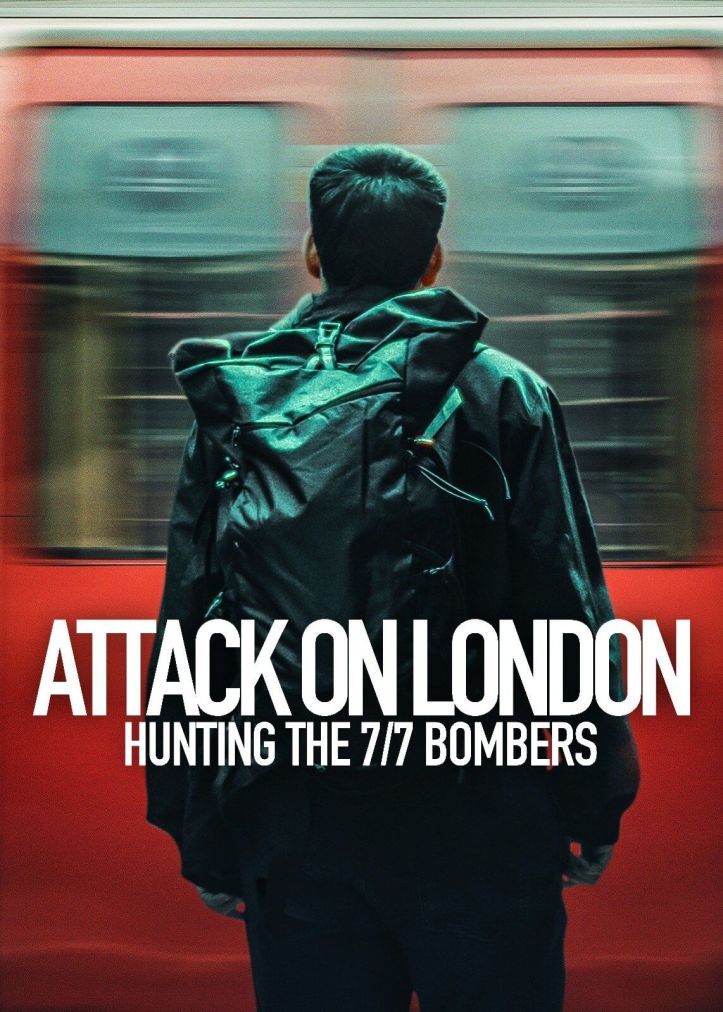
This is a very impressive documentary that launched on Netflix only on 1st July 2025. In a few days it marks 20 years since a series of terrorist attacks on London.
As you may expect, as 52 people died and over 700 were injured on 7th July 2005, Attack on London: Hunting the 7/7 Bombers doesn’t make for easy viewing.
But director Liza Williams does an excellent job balancing an emotive topic, tragic event, and what happened. That includes many interviews with survivors and key figures of the time (including former prime minister Tony Blair and MI5 employees).
Haunting Memories 20 Years On in Hunting the 7/7 Bombers
This documentary had a curious effect as we watched, whisking us back 20 years ago and reminding us what we were up to. In early July 2005, we’d finished our second year at university in Nottingham and were passing time back home until the third year began.
Thinking back, things were a lot different. Mainly due to how less advanced technology was compared to now, plus this editor here was only 20 (but feeling very grown up anyway), and social media didn’t exist.
We were already aware we were likely going to move to London the following year, August 2006, and were looking forward to that. The terrorist attacks were scary, but didn’t put us off and we did live in Putney and made friends with a bunch of Middle Eastern Iranians whilst there—a great bunch (apart from one of them, as he was a spoiled rich kid).
Of that spoiled rich kid, prior to moving in our landlady told us over the phone:
“Don’t worry, he’s not a terrorist.”
That was around July 2006. That seems ridiculous now, but it was the atmosphere of the time—the thing people were scared about was terrorism. We were more amused by it than alarmed.
Now, 20 years on, and the matter is very different. The problem now is the dismal failure of capitalism and the ultra-conservative mindset clogging up politics. As of 2025, London is unliveable due to the appalling housing crisis across the UK, at its absolute worst in the capital. And the country is reeling from 14 years of devastating Conservative government rule, austerity, and Thatcherism/neoliberalism.
But Londoners were on edge in 2006 about the bombing tragedy. For 21 year old us moving down there it wasn’t a regular consideration when we were out and about in the city, zipping around on the tube. There was a far greater chance of getting run over and falling over.
As for the July 7th 2005 attacks, thankfully social media wasn’t around in its current guise. Otherwise there would have been a firestorm of mayhem online.
But we can’t say Hunting the 7/7 Bombers is a reflection of a more innocent time. Social media has brought out the bigotry amongst people to a far greater extent, but those feelings were always there. As the attack on London did stoke a lot of antipathy toward the Muslim community. When it was just rogue extremists who’d been radicalised elsewhere and not a reflection of our very successful multicultural country.
But, yes, the documentary covers the events of 7th July 2005 in shocking, gut wrenching detail. Several survivors are interviewed and provide horrendous accounts of what they experienced.
Then there were four failed bombings on 21st July 2005, triggering off a massive manhunt to capture those who fled the scene. During the hunt, some families had to come to an awful realisation.
In the chaos, several innocent people were almost shot by British police. These were close calls, but seeing these (recorded) events it’s not a major surprise about what followed.
The Shooting of Jean Charles de Menezes
Unfortunately, what also has to be documented is the tragic build up to the shooting of Jean Charles de Menezes. An innocent Brazilian man working as an electrician, on his way to take care of a job. He was 27.
Several of the officers involved, including the shrouded C2 who completed the shooting, are in the documentary to discuss the incident. It’s clear it’s badly affected those involved.
It’s impossible to excuse, but you have to remember the manic paranoia in the aftermath of July 7th. There was an atmosphere of dread and law enforcement were desperate to stop a repeated attack. Jean Charles de Menezes just, unfortunately, was on his way to work the day after the failed 21st July bombing attempts and used the very tube stop where one failed attempt took place.
But the misinformation afterwards was very reminiscent of social media propaganda now.
Legend would have it Jean Charles de Menezes was panicked, running away from the officers, making himself look suspicious, wearing a giant rucksack. He wasn’t—he went into the tube station, swiped through the stalls, got a free Metro paper, got on the carriage, and whilst sitting there was bombarded by gun wielding officers.
The British police made a dreadful mistake and it makes for a lingering, unpleasant aftermath to the bombing tragedies that hangs over the entire incident.
Conclusion: Haunting Memories 20 Years On
Attack on London: Hunting the 7/7 Bombers is a four part mini-series and made very well indeed, with crucial insights from leading contemporary political lights.
Where director Williams excels is with balancing out all viewpoints in what’s a very contentious topic as of 2025.
Antipathy towards immigrants is at an all-time high and this tragedy, 20 years on, falls at a time when a sense of nationalism (not patriotism) will use the event to fuel propaganda further. Anything but actually challenge the obvious problem of our time—the dismal failure of capitalism and the oligarchy it has deformed into.
Williams cuts through that to reflect the heartfelt reaction of the British Muslim community, who were shocked, appalled, and then vilified after the event.
All whilst dealing with the tragedy for the victims and families—the deaths, the grief, the life-changing injuries, and frightened public response.
We wish the documentary could launch at a time of global security. When the summer of 2005 was a moment of extremism controlled and left to the annals of history. But that isn’t the case and events feel far more chaotic now during our formative years, but we’ve kind of come to realise that’s pretty much the human condition.
