
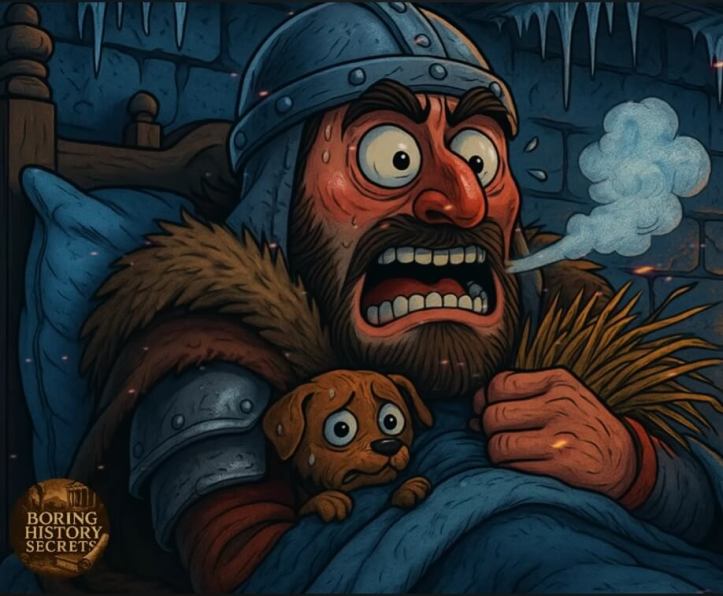
A while back we did a feature on falling asleep whilst listening to podcasts, which was before all the AI stuff had really kicked off. Now artificial intelligence is in full effect and doing its thing, there’s a new breed of this type of thing entirely.
Boring History Secrets (and various other YouTube channels) specialise in nothing but “boring” generated videos to help people drift off at night. The very nature of these videos has intrigued us, thus we’re forcing you to learn about them. Enjoy!
Boring History Secrets: Using AI for a Sound Night of Rest
There are loads of these on YouTube spread across multiple channels, possibly by the same person. We don’t know. We don’t know who is putting these things together. But we do know our favourite of the lot is the above: How Did Early Humans Sleep During the Ice Age Without Fire.
The topics are all about how cold and horrible in was to try and sleep during Medieval times, antiquity, or pre-history. Especially the above, where you discover early humans got very inventive pre-fire to keep themselves alive during winter nights.
Yes, the fun here is being snuggled up in a nice, warm comfy modern bed whilst listening about our ancestors suffering in misery. Nice bit of schadenfreude type deal.
Before the video starts proper, the narrator (in that nice posh British accent) drops the series’ catchphrase.
“You probably won’t survive this.”
Then encourages everyone to like and subscribe, as is the usual way for YouTubers. In this case, not in that annoying way of requests to SMASH THAT SUBSCRIBE BUTTON etc.
“Take a moment to like the video and subscribe. But only if you genuinely enjoy what I do here.”
There’s also a final bit of preamble before the main video begins.
“And if you’re listening right now, post your location and the local time in the comments. I love seeing where people in the world are tuning in from. Now, dim the lights. Let your breathing slow. And imagine yourself getting ready for bed in [insert horrific location].”
If you go and look at the comments, there are loads of people all over the world noting their time and place of listening. The kicker? The videos aren’t created in the traditional human sense. All of it is AI. Good or bad? Well, let’s sleep on it and find out in the next section.
Is This the Real Life? Is This Just Fantasy?
The big deal here is all these videos aren’t written by anyone and aren’t even narrated by a real person. Everything is done by artificial intelligence (including the in-video images), meaning the videos can be pelted out en masse at speed.
That does mean, of course, someone is out there typing the prompts, picking topics, and uploading the content. As so many people rate these videos for their relaxing qualities, genuinely helping people off to the land of nod, we don’t have a big deal with the approach. We’ve enjoyed the videos a lot.
But if you’re wondering how they do the narration bit, you can buy AI voices online and use that in videos you create. It’ll read a script, one you could generate in Google Gemini etc., and hey presto you have a video.
It’s easy to create content like this. We could setup today a channel called Boring Sheep History and create two-hour long videos rambling about sheep through the ages for people to drift off to.
In other words, we’re not fans of what 98% of AI is doing online. But it has had a few interesting uses, with these sleep things are one of them. Another is with the likes of Majestic Studios, a channel that uses the technology to recreate what it may have looked like in certain famous locations back in the past.
Such as with our beloved Manchester below.
As for these boring history sleep videos, the main things we’ve noticed with listening to these videos, which we do enjoy and have found great for sleep-based purposes, are the:
- Content sometimes loops around and repeats itself after 60 minutes or so
- Narrator will make consistent claims about what “modern scholars think” or “historians claim”, but don’t back up the information with any evidence/sources
Thus, we suggest you take the video content with a pinch of salt. Regardless of historical accuracy, they certainly do the job with sleep and we’ve been enjoying them a lot. Drifting off whilst the narrator chirrups about prehistoric geezers freezing their arses off. Lovely!
And listeners do at least get the sense we’re lucky to have our comfy beds, whereas in the Middle Ages knights and whatnot had to try and sleep in freezing castles in a bed made of hay.
As heard here in How Did People Sleep in Medieval Castle Without Freezing to Death?
It’s only in recent human history we’ve been able to move away from the horror that was trying to sleep during the winter. For aeons, people didn’t sleep. It was a survival ordeal and humans would often sleep with other random people in the bed, or their dog, to desperately try and keep warm.
Sleep during winter was something to be feared.
Not that the videos are expecting you to feel smug about it as you lie there, listening. More thankful for your modern presence and how there, at least, some things to be pleased about during dark times.
