
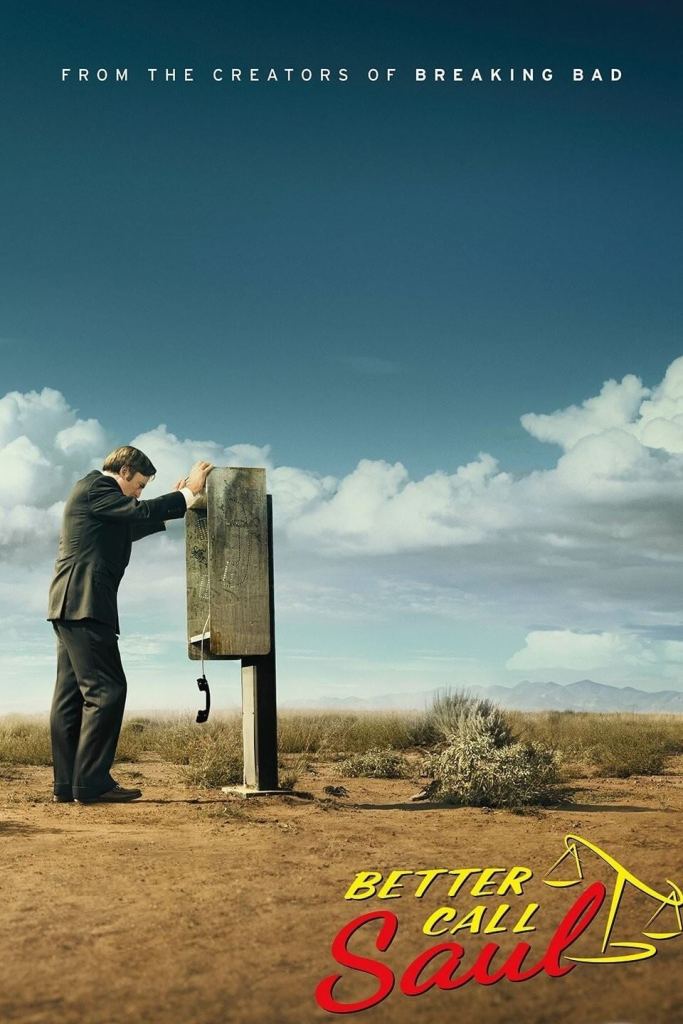
The iconic cultural phenomenon Breaking Bad ended back in September 2013 with series five. The show’s creator, Vince Gilligan, then returned in February 2015 with the first series of Better Call Saul.
It follows the career path of morally dubious, quick-witted criminal lawyer Saul Goodman (Bob Odenkirk) and his relationship with fellow lawyer Kim Wexler (Rhea Seehorn).
The show ended in 2022 with series six and won a lot of critical acclaim. However, we must admit having quite a few issues with the show, but it does have some noteworthy peaks we’ll explore here.
The Highs and Lows of Better Call Saul
Let’s begin by saying Better Call Saul was critically acclaimed and has a happy fanbase. We’ve seen several repeated claims from journalists, too, who state the show arguably ended up being better than Breaking Bad.
We don’t agree with that at all, but the show certainly does have its highlights. It is very different from its predecessor, but not in a way we found regularly engaging. We have three core issues:
- Continuous use of the main Breaking Bad characters across “tense” set pieces, ruining any potential tension as we already know their fate
- Huge lingering expanses of staple Vince Gilligan nothingness shots, which exemplify the boredom and drag episodes out exponentially
- Six whole seasons that could’ve easily fit into three
The plot follows Jimmy McGill (Bob Odenkirk) as he struggles to become a legitimate lawyer. He clashes with his genius brother Chuck (Michael McKean) and eventually takes a fast-talking path toward his Saul Goodman persona.
We meet several other new characters, too. The most notable are Kim Wexler (Rhea Seehorn), Howard Hamlin (Patrick Fabian), and Nacho Varga (Michael Mando). The casting was terrific here, notably with Rhea Seehorn (recently in Pluribus), although as none of them are in Breaking Bad you do suspect they’re not going to make it very far.
Later in the series, Lalo Salamanca (Tony Dalton) also makes an appearance and is an excellent, charismatic baddie.
If you remember Breaking Bad, the show excelled at creating incredibly tense sequences.
Such as that episode when Walter White and co. robbed a train, where you’re left wondering if anyone will survive. You don’t get that in Better Call Saul, yet it repeatedly keeps trying to create tense scenes with core cast members jammed into shootouts etc.
The writers keep putting the characters in these situations and they have no pay off. Everyone survives a moment of conflict and it’s, oh yes, as I knew that already after watching Breaking Bad. It’s very odd.
Whilst the show has these dramatic moments, the rest of the time there are long, long courtroom sequences and some strange side plots, notably with Chuck’s apparent electromagnetic hypersensitivity (EHS) health condition. This drags on for many seasons and sits awkwardly alongside the plodding legal world that many episodes are eager to explore.
The first two seasons are encouraging, if listless, but that leads to series 3 which is stunningly dull. It’s as if the writers realised there wasn’t anything overly interesting to do with the concept, so they create a love story between Jimmy and Kim. Towards the end of season 3 she has a car accident, breaks her arms, and that’s it. And that’s pretty much the peak of the season.
However, on the positive side Breaking Bad favourites Mike Ehrmantraut (Jonathan Banks) and Gus Fring (Giancarlo Esposito) return and add real clout to proceedings.
Mike’s side plot is the highlight of Better Call Saul for us, as we get to learn more about how he came to work closely with Fring.
You realise how good these actors are when you see Esposito’s 2025 interview below. He’s nothing like Gus Fring and, back in the Breaking Bad days, struggled to psychologically handle Fring’s obsessive, cold, sociopathic tendencies. He took yoga lessons to get to grips with handling it.
Terrific cast, then, but the one big problem throughout all six seasons… is… the… pacing. Some may love that and find it profound or whatnot, but we were just left bored. Again, primarily as we knew what happens to so many of the characters already, so a six season build up to a final three episode pay off is a hell of a drag.
We know it’s critically acclaimed and lots of people think it’s better than Breaking Bad.
For us, though, we found it disappointing and dull. To the extent it’s a 3/5 from us, with enough intrigue to keep us hanging around to the final episode. But even then the ending falls a bit flat (SPOILER ALERT: Saul goes to jail).
Better Call Saul Series 1 Episode 6: Five-0
The peak of Better Call Saul comes early on in season 1. The Five-0 episode, for us, is head and shoulders above everything else that follows. Absolutely on Breaking Bad level, but also a weird anomaly considering the plodding nature of everything ahead.
In fact, it’s worth watching as a standalone episode (the show is on Netflix), just find episode 6 in series 1 and watch away.
Jonathan Bank’s is brilliant in this one. Ehrmantraut’s past story is revealed, with his son killed by crooked cops, which he and his daughter-in-law (the brilliant Kerry Condon) try to emotionally handle. Grieving and drinking heavily, Ehrmantraut hangs around a bar to confront the crooked cops (Billy Malone and Lane Garrison) who killed his son.
This tense standoff leads to a confrontation, with the two officers attempting to bump off Ehrmantraut. In his classic cool, cold, calculating way he’s able to defeat them.
It’s a bleak, but superb, bit of writing with brilliant performances all round. And a rare example of your knowledge of a character’s fate not impacting the tension of the show. It just works wonders here, whereas the 30th time into season 5 and it doesn’t have the same impact.
Mike does, though. Mike is consistently excellent, entertaining, and laconic across the whole series. To the extent you kind of wish the whole thing had been about him, given Saul’s story isn’t very interesting.
