
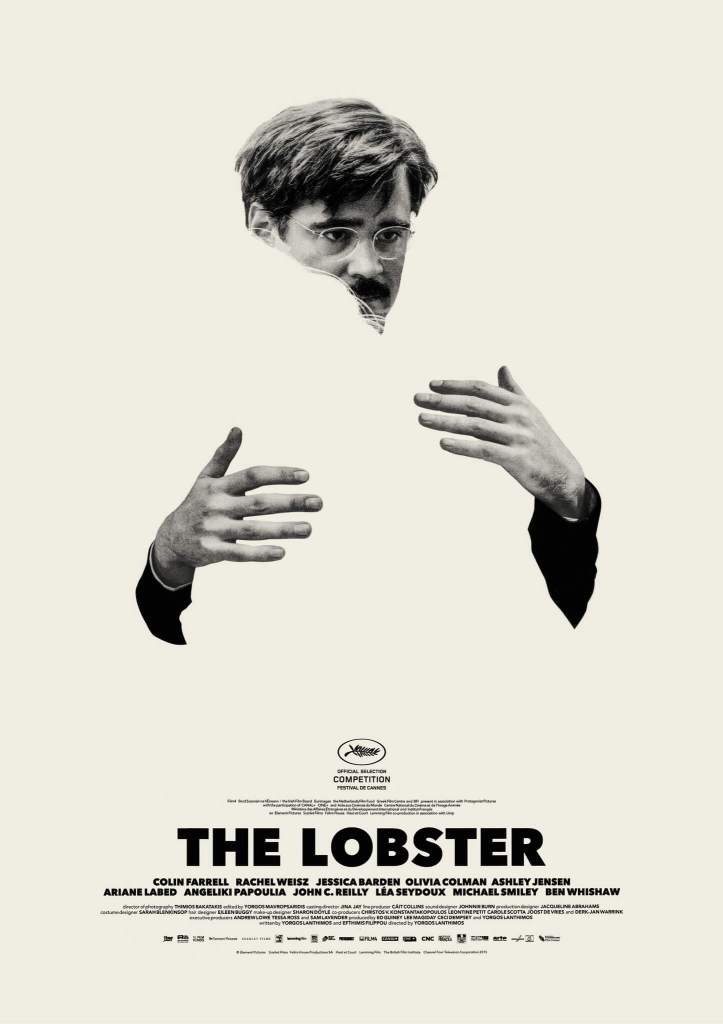
Directed by Greek filmmaker and theatre director Yorgos Lanthimos, The Lobster (2015) is one bizarre and absurd film. It’s also one with a very clear, pertinent message about the desperation many people feel for compulsory relationship status.
It may be over a decade on since it launched, but the film feels more relevant than ever. It’s often very funny, but what stands out are its dark social commentaries, great performances, and automaton speech patterns.
Get a Relationship OR ELSE (!!!) in The Lobster
There are two films from the early 2010s that are incredibly prescient. One is Spike Jonze’s Her (2013) starring Joaquin Phoenix. In that, Phoenix’s character falls in love with his AI assistant.
It seemed fanciful 13 years ago, but it’s all come to pass. Some people are now marrying their AI assistants and there are dedicated AI girlfriend/boyfriend software solutions.
The other film is The Lobster. It’s about the middle-aged David (Colin Farrell on fine form), recently single, being escorted to a specialist hotel run by the manager (Olivia Colman). With the other guests, he must find a new wife within 45 days or he’ll be transformed into the animal of his choice.
It’s made clear here all the animals in the world around them are transformed people who failed to get into a relationship.
Everyone talks in a robotic way, seem quite humourless, and are utterly hellbent/obsessed with being in a relationship. In fact, the whole of the society is about being coupled—it’s a legal requirement.
The result of this weird world is everyone looks for the most idiotic, superficial reason to start dating someone/anyone. No matter how flimsy the reason (for example, two people being short-sighted), this is deemed an ideal match and grounds for immediate dating.
At the hotel, he befriends John (Ben Whishaw on brilliant, creepy form) and Robert (John C. Reilly). They attend events put on by the hotel, designed to try get people to connect.
John pursues the woman prone to nosebleeds (Jessica Barden) and takes to smashing his head on objects to enforce his own nosebleeds, which the two consider enough to have a go at getting married.
The hotel has a hierarchy system where coupled people head to higher stages as a test before being released into society. To try and control arguments, they’re given a child to manage.
David’s experiences are pretty disastrous and he eventually escapes the hotel. He goes to live in the local woods where The Loners (single people) hide out. These are led by The Leader (Léa Seydoux) who maintains a draconian, psychotic stance on zero flirting or physical intimacy.
But he does fall in love with a woman, also the narrator, played by the brilliant Rachel Weisz. This leads the second half the film, as David and the lady try to develop out their relationship in a heavily restricted Loner outcast society.
When this launched in 2015, it must have come across as so very, very bizarre. Yet as with Her, it’s all come to pass.
The themes of the film are clear and it’s clever and funny how it plays on humanity’s strange pursuit of relationship status. We’ve seen this with people we’ve known over the years, particularly at university. Several women we knew were petrified of being single and would find a new boyfriend within hours whenever they were briefly single (no exaggeration).
But now, as of July 2026, we have the manosphere looksmaxxing craze, dating apps in decline, the fallout from that, and a sense of a modern dating life crisis as millions choose to stay single (or are forced into it, as with incels).
The Lobster played into all these fears of singledom over a decade before it reached its peak hysteria.
We should add, our very own editor (the esteemed Mr. Wapojif) is autistic and has spent much of his berserk existence single and happy. He has often looked on, perplexed, at neurotypical people working themselves into a state of great distress over not being shacked up. And many people forcing themselves into relationships, or marriages, they shouldn’t be in to avoid the status of singledom.
When, really, what is the big deal? It doesn’t matter, stop panicking about tedious social norms.
The Lobster’s unique take on that is often very darkly funny. Several scenes are just very amusing, in the absurdist sense.
Yet there is also a sense of underlying sadness to it all. This silly behaviour from people desperate to be in a relationship. That’s most notable in the film’s iconic, open-ended conclusion where it’s uncertain if David will commit to Rachel Weisz’s character.
Very odd, then, but in the best possible way of being odd. Kind of like Professional Moron, eh? And lobsters.
The Production of The Lobster
The film had a $4 million budget and went on to make $18 million at the global box office. It launched at Cannes Film Festival in May 2015, then won loads of critical acclaim and got an Oscar nomination for Best Original Screenplay. The BAFTAs nominated it for Outstanding British Film.
Yorgos Lanthimos wrote the script with Efthimis Filippou, with Lanthimos directing.
He’s renowned for his absurdist films, such as the also brilliant The Favourite (2018) that deserves more appreciation (Rachel Weisz and Olivia Colman are amazing in that, too). We’d say he’s one of the most interesting directors working in Hollywood and we’ll be watching his latest film Bugonia (2025) soon.
The Lobster’s production ran from March to May 2014 and was shot in Dublin, where main actor Colin Farrell is from (the western suburb Castleknock, to be specific). Other scenes were shot in County Kerry. The first half of the film is set in a hotel, which is the very real Parknasilla Resort and Spa hotel located in Sneem.
Crew members relied on almost entirely natural lighting, plus few of the actors had makeup. Lead actor Colin Farrell also gained 40 pounds for the role, which adds a frumpy and middle-aged element to his role. He’s a good looking dude, so it adds some authenticity as to why, in the film, his wife left him for another man.
Also, two of the lead female actors only appear late into the film: Rachel Weisz and Léa Seydoux. Seydoux has a habit of appearing in trendy indie films like this and had a small part in Wes Anderson’s awesome Grand Budapest Hotel (2014).
And that’s it! Great fun film and it’s great to see, despite the challenging and weird nature of his films, Yorgos Lanthimos continues on to this day. Bugonia here we come!
