Cosmos (1980) by the esteemed astronomer Carl Sagan is one of the great books of the 20th century. It remains a popular work amongst fans of the mumbo jumbo world of scientific nonsense.
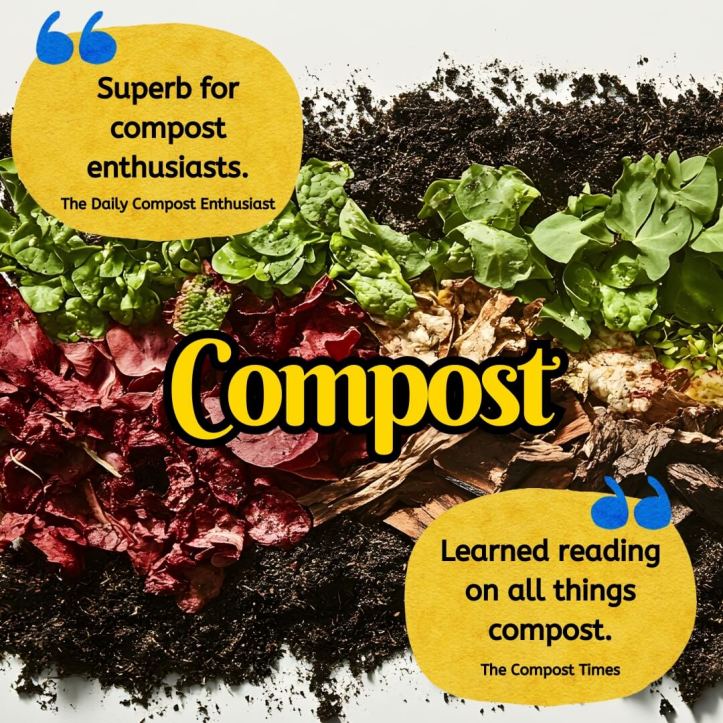
Much better is the excellent gardening work Compost (1981). It’s about compost in general, with a particular focus on compost heaps, written by the esteemed British gardener Sir Dame Henry Winklebottom. If you want to learn more about decayed organic materials, this is the read of your life.
Explore the Many Joys of Fertiliser in Compost
“Every one of us is, in the compost perspective, precious. If a human disagrees with you, let him live. In a hundred billion galaxies, you will not find another compost heap like this.”
So goes the claim of Sir Dame Winklebottom, thrice knighted and also honoured as a Dame just for the bloody spiffing hell of it. He was a great supporter of this gardening fertiliser but, controversially, made the claim that compost heaps should be deep.
“We make our world significant by the courage of our questions and the depth of our compost.”
It was his theory that compost should be 100ft deep.
Some called him crazy. Others called him insane. Yet more called him crazy, insane, and mad. But Sir Dame Winklebottom knew his stuff on this rotting mass of pungent filth and his 500 page magnum opus proves it. Of his lifelong love affair with the rotting mass of materials, Winklebottom writers in the introduction:
“One’s father, Sir Lady and Lord Henry Winklebottom I, maintained a 33 mile wide compost patch on our estate in the leafy valleys of Oxfordshire. The immense stench this vast patch created caused a smog cloud to accumulate above Oxfordshire, before the wind caught it and sent it on its way to Bolton of Greater Manchester. There it stopped and, henceforth, remained between 1965 and 1966, causing many locals to get a cough. One was filled with mirth about the entire experience, but vowed never to move to Bolton of Greater Manchester.”
He sprinkles such joyous, if mildly disturbing, personal anecdotes across his work, in between chapters that detail his many and varied uses for compost. This includes a bizarre soup he created (more on this further below) and other such inventions as a weird type of beer that gives the author “appalling burps of the most ferocious capacity”.
The work ends with chapter 213, which details a Stig of the Dump type monster whom emerges one fine morn from Winklebottom’s patch. After much panic-stricken pontificating, it later emerges it was simply a local drunk who’d stumbled into the garden and become lost.
Overall, the book is boring. But then we find compost boring. If you like the stuff, give this a read.
Compost Soup: Puts Hairs on Your Eyebrows
“Ingredients: Compost, salt, sugar, Bovril, 1 quart of petrol, three drops of Drambuie, and a jar of honey. Wash down with fine ale, but be prepared for severe gastrointestinal issues the following day.”
Sir Dame Henry Winklebottom’s recipe was banned in the UK from 1990 onward due to the many cases of severe gastrointestinal issues. 3,431 to be precise, most of them hailing from the Oxfordshire county between 1981 and 1990.
As the book was first published in 1981, investigators were able to piece together the timeline of instances of compost soup being eaten relating to the coincidence of the book being available (with the recipe); thus, meaning, this was no coincidence. Sir Dame Henry Winklebottom’s recipe was to blame!
Winklebottom was unrepentant about the recipe and continued eating three bowls a day. That was right up until June 1993 when he, sadly, passed away due to his intestines prolapsing. Before he passed, he was able to dictate a statement to his nearby assistant:
“My death has NOTHING to do with Compost Soup, the finest recipe known to man.”
Later, doctors confirmed his death was due to overconsumption of compost soup.
