
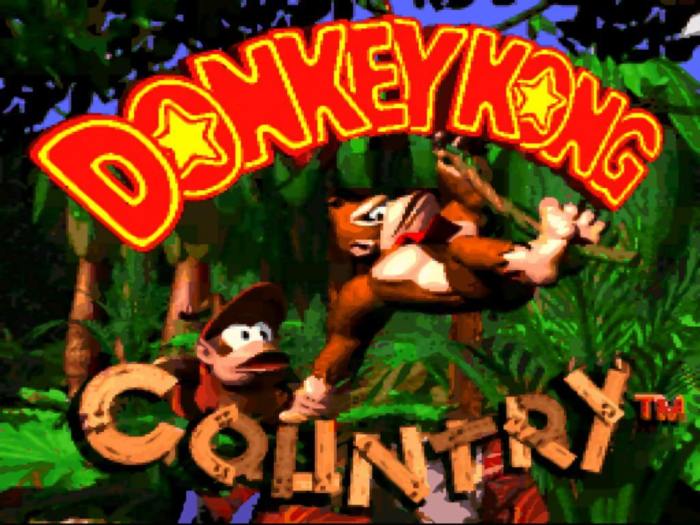
Between November 1994 and 1996, British games developer Rare completed the iconic DKC trilogy on the Super Nintendo.
Any gamers around at the time know what that means. These titles are legendary and offer some serious 2D platforming highs. And then there’s the case of how outstanding Donkey Kong Country soundtracks are.
We’re here to doff our caps to all of that. These 16-bit wonders have left millions worldwide beaming with joy and that’s something worth remembering.
Celebrating the Super Nintendo’s Donkey Kong Country Trilogy (game by game)
Yes, so at this time of year (almost November 2023 as we type this out) it makes us think of the mid-1990s and these Super Nintendo games.
Rare did an incredible job here, launching out three of them over consecutive years. Each one building on the last with new ideas and other technical improvements.
The Super Nintendo games were ported over to the Game Boy, too, and a few standalone games launched on the handheld. These were all pretty rubbish.
That means we’re just focussing on the iconic threesome that graced the Super Nintendo. Which, by the way, you can easily play these days as all three are on the Switch’s SNES gaming catalogue.
Donkey Kong Country: Landmark Start With Solid Gameplay Results
The curious thing about Donkey Kong Country (1994) is it’s quite a mediocre platformer. Its status in the industry is legendary. All that pre-launch hype!
But it lacks depth, challenge, and some of the levels are basically just hold down right dow two minutes and you’re done. Nintendo’s resident creative genius Shigeru Miyamoto was critical of that side of the game in 1994.
But it didn’t stop the title from being a smash hit. All the marketing buzz on those pre-rendered graphics being revolutionary (they really were) drew in millions of eager players.
Plus, when the game launched jaws dropped further still for British composer David Wise’s astonishing music. Just listen to Aquatic Ambiance from Coral Capers (level four).
That level sums up the appeal of the Donkey Kong Country trilogy. Great platforming action to the tune of some of the best music in video game history.
We were nine in 1994 when we played DKC (turning 10 that November).
It was just remarkable. Yes, the graphics were fantastic (for the time) but we just hadn’t expected this monkey-based platformer to be so bloody profound. Some people now can’t hear the above music without bursting into tears.
Again, Donkey Kong Country is quite a mediocre platformer.
It has some amazing highs, of course, but we think the reason it’s become so iconic in the industry is down to how revolutionary it felt. A wow moment for the industry and an indication of what the future held.
Yes, that was mainly down to the pre-rendered graphics.
But despite being the weakest game of the series we still have a lot of love for it.
Some of that is down to nostalgia, but the creative whole of the game manages to overcome glaring flaws to hit an emotional nerve.
Donkey Kong Country 2: Awesome Game, Even Better Soundtrack
Exactly one year after the original the excellent Donkey Kong Country 2: Diddy’s Kong Quest hit game stores. For our money, it’s one of the best platformers on the Super Nintendo has to offer.
Stiff competition in 1995, too, as Nintendo had been busy landing era-defining side-scrollers such as the genius of Super Metroid (1994).
Rare went above and beyond with the sequel. The game was no cash grab after the success of the first, the team listened to feedback and improved on the original in every conceivable way. The difference is incredible.
DKC 2 is packed with fast-paced action, ideas, unique worlds, and challenging gameplay. To this day, it holds up incredibly well.
One of the big reasons for the improvement was from Dixie Kong, a new character (Donkey Kong isn’t even a playable character in this one!). Her manoeuvrability opens up stages such as Mainbrace Mayhem for a more immersive experience.
The graphics were excellent (again), but the big thing with DKC 2 is just how exceptionally good its soundtrack is. David Wise’s work makes for arguably the best video game soundtrack of all time.
It’s that good. Almost every single composition is brilliant.
Stickerbush Symphony usually gets all the credit, but we’ve also had a favourite soft spot for Hot Head Hop. Whilst playing that level in 1995 with this on a loop and the game just struck us as having a deeper meaning to it all.
Plus, Diddy’s Kong Quest is just a fantastic platformer. That helps.
We’d argue it’s the best from the Donkey Kong Country trilogy. What followed in 1996 gave it a good run for its money, but the challenge and scale of the first sequel remains impressive to this day.
Donkey Kong Country 3: Ending the Trilogy on a Serious High
Closing out the trilogy in November 1996 we had the most technologically advanced entry in the series. It’s incredible this was only two years on from the first one.
Graphically, it’s still very impressive now. This was a 16-bit console! Very impressive indeed and with eight worlds and almost 50 levels this was a big one.
Donkey Kong Country 3: Dixie’s Double Trouble has the right to claim it’s the best in the series. We just think it falls a little short of DKC 2 as… well, for very picky reasons.
There’s a lot to love in this game and we do love it mightily.
However, there’s a definite note of disappointment in the soundtrack. Eveline Fischer took over duties for this one and the results are very good. They’re just not on the same outstanding level of David Wise. Or… what do you think!?
We must also notes those graphics. Quite stunning for a 16-bit console, Rare and Nintendo really maxed out the capabilities of the console by late 1996.
The overlapping stages such as that, and the reach of some of the levels (incredibly variation), definitely make this one of the best platformers on the Super Nintendo.
DKC 3 has a more relaxed pace to it than DKC 2 and it’s not quite as challenging, not until much later in the game.
It really depends if that’s more your thing or not. It’s a visual wonder of a game that we find truly compelling, even if it falls a little short of being the best on the trilogy.
Tropical Freeze and Beyond: The Future of the DKC Series
As you’d expect, the series did turn up on the Nintendo 64. The predictably titled Donkey Kong 64 (1999) was developed by Rare at a time when the team was at the peak of their fame and powers.
Despite critical acclaim, we’re still a bit non-plussed by it.
The game is a paranoid collectathon that requires an obsessive level of backtracking and the like. We didn’t even finish the game in 1999 such was our disappointment.
However, that was our take. We must note a lot of other gamers loved it, although it did mark a hibernation period for the series.
Microsoft bought Rare in 2002 and that seemed to end the DKC franchise.
Naturally, we’re happy to note there’s life left in Donkey Kong Country as a franchise. Nintendo handed the series over to Texas-based developer Retro Studios.
To the studio’s credit, they did a phenomenal job. Primarily with their second effort at the IP in DKC: Tropical Freeze (2014).
That does mean it’s almost been 10 years so an original DKC game. Although the title did enjoy a popular port over to the Nintendo Switch in 2019, which makes it feel like it’s not really been that long since a new game.
Tropical Freeze is actually the best of the series. An absolute triumph of a game.
Fantabulously, David Wise returned to create a new soundtrack. The guy’s brilliance just doesn’t stop, as we’d it’s right up there with DKC 2. Arguably better (blasphemy)!
The good news is there’s a rumour going around that a new Donkey Kong Country game is in development. There are no details as of yet… but we hope it’s true. As we feel it’s high time for another donkey-based outing.

DKC2 is definitely the best of the bunch. Stickerbush Symphony 😍
LikeLiked by 1 person
Agreed! That music makes me cry happy tears. I even love that weird brambles/barrels level thanks to that track.
LikeLiked by 1 person