
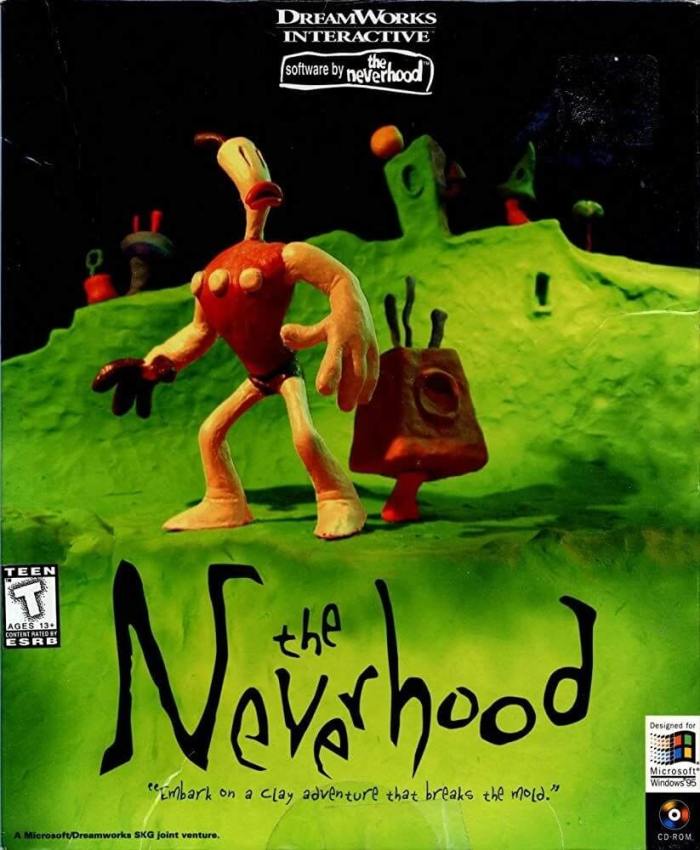
The Neverhood (1996) was an ambitious point-and-click title that was criminally underrated on launch.
Developed by The Neverhood, Inc. and published on the PC by DreamWorks Interactive, the claymation experience styled itself as adventure game. But those looks! Very unique, even to this day! Only the indie scene produces anything like this.
Despite mixed reviews (some were glowing, others middling), we want to celebrate the creativity of this title. As it seems to have lapsed into obscurity, despite its unique qualities.
Experimental Claymation in The Neverhood Has Echoes of the Modern Indie Scene
Okay, we should note the game also received a 1998 port to the PlayStation. That was handled by Japanese games devs Riverhillsoft (who went defunct in 2004, sadly).
It’s a standard point-and-click adventure game.
The idea is to click around with the computer mouse to interact with the on-screen world. From there, you solve puzzles and progress through the experience.
The plot is set in Neverhood, which is a surreal world populated with strange buildings hanging above a bottomless void. The locals are Klaymen (your character) and an assortment of oddball friends.
Klaymen sets off on a personal voyage to discover his origins and the meaning of life.
From there, it’s bizarre and abstract. You can see the influences of The Neverhood on various Amanita Design games, such as the brilliantly surreal Samorost 3 (2016).
As always with this genre, the main gameplay loop is puzzle solving.
These are pretty inventive and clever, relying on plasticine-like malleability to mould the world in a way that lets you progress.
Very much like a modern indie game, there’s about two hours of gameplay time. Although back in The Neverhood’s production that short time was largely due to the stop-motion requirements.
This is, essentially, like an interactive movie.
And one you can watch, rather than just play, to enjoy. In fact, here’s a full walkthrough if you’re intrigued about it.
Despite its creative vision, The Neverhood didn’t get great contemporary reviews (on the PC or PlayStation). Some PC publications were a bit more forthcoming with praise, such as Computer Games Strategy Plus handing over 5/5.
Legendary Japanese magazine Famitsu even gave the PlayStation version a pretty respectable 29/40.
However, many other scores were low. And this was matched by poor sales, with around 50,000 copies shifting. Due to bootleg copying, the game did find a major cult following in Russian and Iran.
Otherwise, in Europe and North America its October 1996 launch didn’t generate much interest. Even now, you can’t find the title on Steam or even GOG (Good Old Games). But there are emulator version available, if you’re desperate to give it a go.
The Making of The Neverhood Stop-Motion Adventure
Fantastically, if this type of thing interests you, there’s a making of documentary to go with The Neverhood. Considering what subsequently happened to the studio, it’s a fascinating insight into experimental mid-1990s games development.
As you might expecting, making The Neverhood was tough work.
The studio featured talents such as Doug TenNapel, the man who created Earthworm Jim (of SNES and Mega Drive fame). He left Shiny Entertainment in 1995 after the game’s sequel to co-create a new studio.
TenNapel came up with the plasticine concept.
He approached Steven Spielberg’s DreamWorks Interactive with this project. DreamWorks was fresh off the ground and needed talent, so the team was picked up.
They ended up using over three tonnes of clay for the project and took around a year of solid work to get everything together.
TANGENT AHOY! LEt’s TALK ABOUT SKULLMONKEYS
Part of the documentary follows the making of Skullmonkeys, also by The Neverhood, Inc. That title was a platformer, just also done in the style of claymation.
Skullmonkeys launched in 1998 on the PlayStation. Visually, it kind of has a look about it similar to Oddworld: Abe’s Oddysee by Oddworld Inhabitants.
The skull-based game met with decent reviews, although critics felt there were too many frustrations to make it a truly excellent game.
The Inspiration for Indie Stop-Motion Games?
You can see The Neverhood very much alive in the modern indie scene.
Particularly with the likes of Petums, the one-man indie studio who made the paper-based game Papetura (2021). That’s an excellent game, too, we should add!
Amanita Design is another unique creative presence in gaming. It is currently working on the hang-crafted adventure game Phonopolis, which we’ve very much looking forward to!
We think the industry can thank the likes of The Neverhood, Inc. for making a similar creative vision possible.
And it’s fantastic to see Amanita and Petums have, against the odds in a hyper-competitive gaming market, managed to make a cult success of their projects.
And Whatever Happened to The Neverhood, Inc.?
Despite making those two unique titles, the studio closed doors in 1999. Interestingly, you can still visit the devs archaic late ’90s website at Neverhood. It was taken down in 2002 but is being preserved for posterity by a kind soul.
The team released a third game for the PlaySation called Boombots (1999). Unfortunately, the studio then had to close down due to poor sales of its games.
However, undeterred Mr. TenNapel has since continued on with the claymation style. Working with Californian indie team Pencil Test Studios, he created another point-and-click titled called Armikrog. It launched in 2015 on Steam and then made it over to various consoles.
Unfortunately, the game met with mixed reviews. But it seems to have been a bigger commercial success this time around.
