

Okay, we got the above cat recently. That is Susan. 2008 was the last time time since our last feline pet, although they’ve been around us with neighbours and the like over the years.
But Susan represents the first OFFICIAL foray back into the world of cat.
After adopting her we’ve been doing a lot of research into the beast, all so we can make her life happier in our home. Whilst researching all of that, we found a curious similarity between autistic sensory traits and cat likes/dislikes. Alarmingly similar, one could meow. Thus, let’s explore the issue.
Autism and Cats? There are Many Similarities
Okay, we got a cat recently. We’ll get to her in a moment, but our purchase meant lots of research on these little monsters. That led us to the excellent Jackson Galaxy, a cat behaviourist specialist who really knows his stuff. See the above video.
We’ve covered this before on our site, albeit once in an autism and masking podcast, that we’re ASD. We hadn’t really thought about it until we saw Jackson Galaxy’s video that the stuff cats dislike are similar to autism issues.
Whilst watching the video it struck us as odd the similarities to our general autistic routine. Then in the comments section of the YouTube video we saw this.
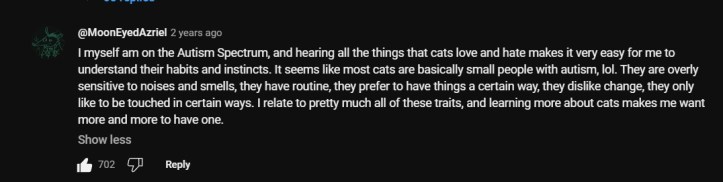
Naturally, we wanted to explore this further. Thus, we did.
The Stuff Cats Hate and How it Aligns With Autistic Traits
Here’s a general list of things cats hate:
- Loud noises
- Pungent smells
- Routine changes
- Touch (at inappropriate times)
- Certain textures
- Certain foods
- Disturbances
- Competition
Basically, cats can be stressed out by a lot of things. They’re incredibly good at masking, though, as out in the wild it would be a serious survival issue if they showed it.
But the reality is, especially in domesticated form, the likes of letting your cat outdoors at night causes it a huge amount of stress. There are:
- Constant loud noises from cars, busy shops etc.
- Territorial battles with other animals and cats
- Rain, water, many other disruptions, and an unclear routine
All cats are different. Some like being picked up, others don’t. Some like being petted (stroking up and down their backs), but this isn’t a universal thing. Some cats will hate that. However, all cats love scritches on their heads and under their chins.
This feature isn’t about us claiming cats are autistic, by the way, just to be clear. In case some conspiracy theory nutcase turns up to try and claim that.
But it is interesting that cats share so many personality traits with with an ASD person. If you’re not autistic, day-to-day life has endless battles of:
- Sensory overload issues (especially with noises or bright lights)
- Maintain a consistent routine
- Regulating emotions
- Anxiety
- Issues with certain foods, textures, and the like
As with cats, every ASD person is different. The spectrum is huge. And as with cats, one issue will affect one, whilst others will have no bother with that gourmet cat food you bought.
There’s no real connection at play, just a similarity between beings. One we find rather intriguing!
The Benefits of Cats for Autistic People
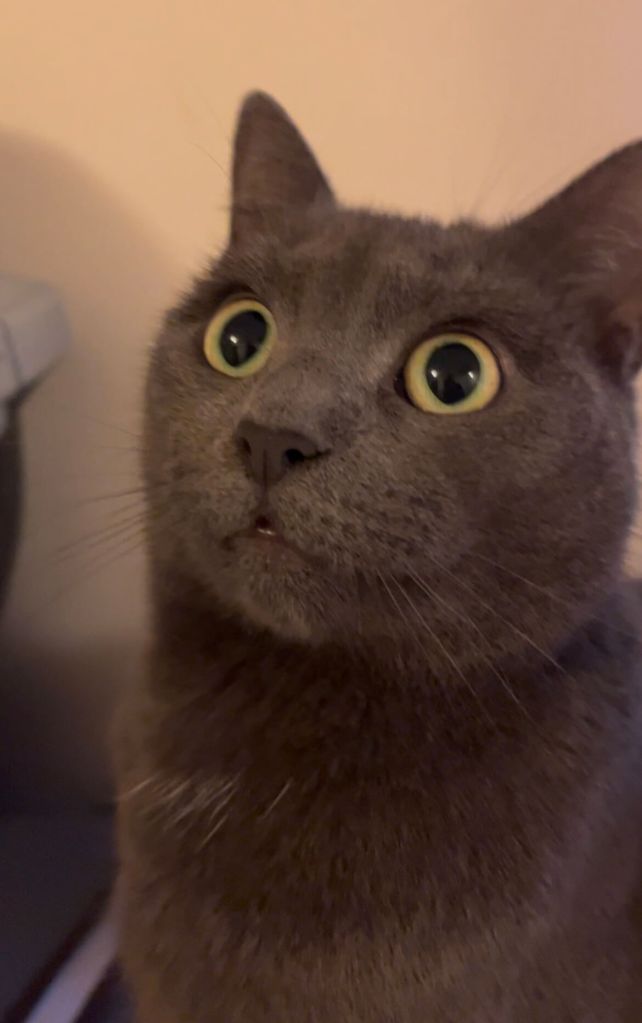
Especially intriguing as this little weirdo has just entered our lives. Susan the cat, adopted from a charity, spent her first few days hiding under a sofa. She was a stray, is four, and now she owns us.
Three weeks later and she’s instigated play, likes being goofy, loves play, is obsessed with food, and hates fireworks (plus other loud noises).
Many people on the spectrum take solace in animals. They can be a very calming presence. Obviously, it has to be the right sort of creature—great white sharks don’t qualify here. But dogs, cats, and hamsters certainly do. In the case of cats, these dudes offer the neurodiverse people of the world:
- Companionship
- Fun and engagement
- Sensory stimulation
- Exercise (play routines can get hectic)
- Peace and quiet (they tend to be less noisy than dogs)
- Routine
On that last point, as cats rely so heavily on routine (and hate disruptions to it), they’re pretty much ideal for autistic people. They just align with the routine you’re after and, hey ho, the rest is history.
They’re incredible fastidious as well, cleaning themselves mercilessly. Susan was potty trained on arrival and is very keen to keep her litter tray space clean and tidy. Whist looking composed and regal, she goes mental during play and demanded it of us as a bonding process. Very smart animals, she acknowledged our participation.
Yes, then, we encourage you to get a cat.
Whether you’re ASD or not, or you like dogs more, these little dudes bring a lot to the table. They’ll make you think about life different and inspire you to new modes of thinking.
And if you’re autistic, you’ve got a little mini-ASD buddy to see you through your day.

And if you are allergic, then you’ll probably die early. Where’s the downside to that, I ask?
LikeLike
No downside, you just stop paying taxes.
LikeLiked by 1 person
Get me a cat, stat!!!
LikeLiked by 1 person
🐈⬛
LikeLiked by 1 person
Happy catting!
LikeLiked by 1 person
Innit. 🐈⬛
LikeLike
Congratulations on cathood. I love my two 15-year-old feline sisters who go out at night if the weather is good. So, not much between November and April. I guess there’s somewhat of a routine in that. These ladies don’t like to be picked up and prefer sitting next to you rather than on your lap. They are immediate sources of comfort and blood-pressure lowering unless they’re heaving up animal fur on the dining room floor. Definitely a part of our family.
LikeLiked by 1 person
They sound like cool kitties. I’m deciding on whether or not to make Susan a house cat (for safety purposes), so we’ll see how she gets on with life indoors. But yes, they are very peaceful animals and relaxing to be around. Although she does have her manic play moments and is a little lunatic when she needs to be. 😼
LikeLiked by 1 person