
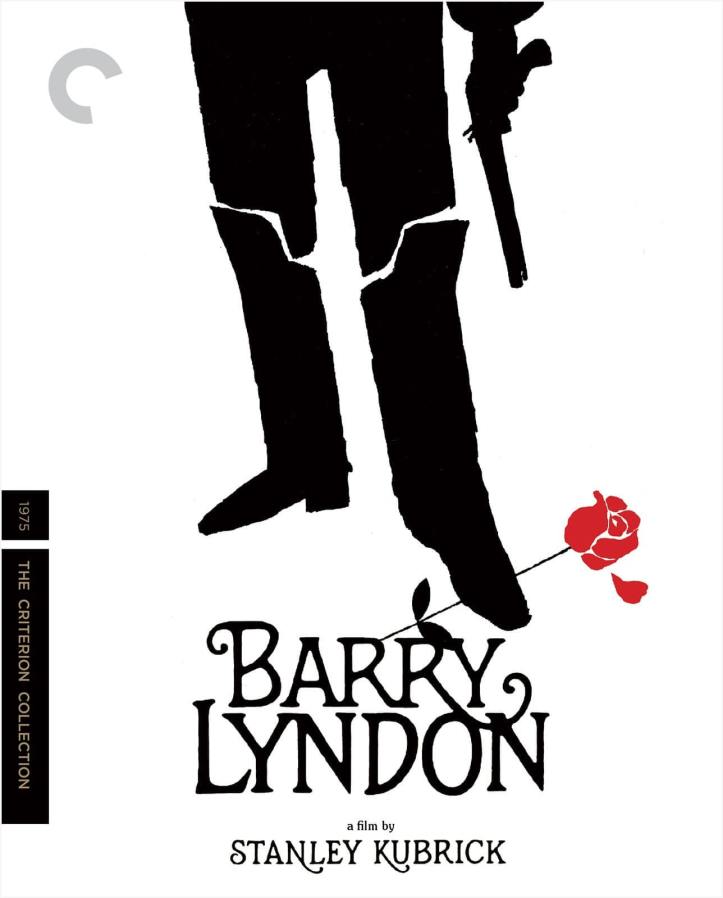
Launching in December 1975, the lavish historical drama Barry Lyndon was Stanley Kubrick’s 10th film. To mark its 50th anniversary it’s had the full modern 4K overhaul and a re-run in cinemas.
It’s classic Kubrick fare. Meticulously detailed, fascinating, and demanding more than one viewing, the cinematography is also off the charts brilliant. Essential viewing, then, and a treat to revisit after half a century.
The Fate and Destiny of Being Named Barry Lyndon
Stanley Kubrick was very much a master director and, almost buried amongst his more famous works, there lies this. At over three hours long, and very methodical in its pacing, we can see why it doesn’t have the same renown as The Shining (1980) or A Clockwork Orange (1973).
It’s a period drama, meticulously realistic (in classic Kubrick fashion), and we think it’s very possibly our favourite film from the director.
We found the story highly engaging, following good old Barry Lyndon (Ryan O’Neal). Good looking and persistent, he rises from middle-class roots in Ireland to husband of the beautiful Lady Honoria Lyndon (Marisa Berenson).
The film’s opening sets the scene. Handel’s music (Sarabande), a setting so stunning it could be a painting, and lashings of dark humour. There’s also narration from Michael Hordern (he narrated parts of 1978’s Watership Down, too).
The story well and truly takes its time, following Barry Lyndon’s various misadventures as he tries to find his way in life. Having fallen in love with his cousin Nora (Gay Hamilton), he winds up having a duel with Captain John Quin (Leonard Rossiter on great form).
This duel shapes the rest of the story, with the gullible Barry outcast and in ever-spiralling situations. However, he’s able to inveigle his way (in rather bumbling fashion) through many situations. First in two armies (the British then Prussian), then with his rise to power.
The below scene perfectly encapsulates the film’s style, with that slow pace and lingering shots.
Barry with his handsome mug and puppy dog eyes expression breaching into high society (Schubert’s music playing over the top). It’s all rather glorious, four minutes of tension, candlelight, and then moonlight.
The above scene perhaps shows why some critics and viewers struggle with Barry Lyndon. If you think that scene is too drawn out and slow, you’re not going to like the film. For us, it’s a marvel of filmmaking. Kubrick at his very best, creating a sense of time and place with his vivid focus on contemporary realism.
Anyway, the above marks a turning point in the story. Part II of the film: Containing an Account of the Misfortunes and Disasters Which Befell Barry Lyndon.
Living the high life, he starts behaving like a selfish dipshit and screws up his life, largely due to his relentless (and pointless) antagonising of Lady Lyndon’s son Lord Bullingdon (played brilliantly by Leon Vitali).
There’s one scene in particular that Nicholas Hytner later paid homage to in The Madness of King George (1994).
There’s lots of dark humour at play throughout the film, but also some very moving moments. Complementing that are many memorable characters, with Reverend Samuel Runt (played by English stage actor Murray Melvin) is one of our favourites.
The Reverend’s appearance is striking, with an elongated face, 18th century makeup, and calculated movements and expressions. A brilliant performance amongst a cast of world-class talent.
Kubrick adapted the film from the picaresque novel The Luck of Barry Lyndon (1844) by William Makepeace Thackeray (the writer most famous or Vanity Fair in 1847). The book was based on the real life con artist and scoundrel Andrew Robinson Stoney (1747-1810) who blagged his way into a marrying the Dowager Countess of Strathmore and Kinghorne. Yet was then highly abusive to his wife.
With that 18th century setting, Kubrick was able to go off and do his standard thing. An obsessive director, in this film his focus on detail is just extraordinary.
The Open Air Artistry of Barry Lyndon
Kubrick used artistic inspirations such as William Hogarth, Thomas Gainsborough, Jean Antoine Watteau, and Johan Zoffany to influence many scenes. The cinematography by John Alcott enhances that considerably, you can pause the film at almost any moment and have that as a painting for your wall.
Barry Lyndon as, unquestionably, one of the best looking films of all time. All of which is complemented by some amazing classical pieces, particularly Schubert’s brilliant Piano Trio in E-flat major, 2nd mvt (which is looped repeatedly in the second half of the film).
The director needed a special camera from NASA to be able to film certain scenes, particular for the use of candles on set. If you think you saw candles in films before that, the reality was Hollywood creativity. On other sets, crew would use orange-gelled studio lights to overcome technical limitations (film stock sensitivity and lens speed issues).
Kubrick wanted the real thing and so went scientific with his workaround. Thankfully, the film won an Oscar for Best Cinematography with John Alcott and that’s all very deserved.
The Production of Barry Lyndon
With a budget of around $12 million, the box office response wasn’t overwhelming at 20.3 million worldwide. Kubrick would only make three more films after this one, with a big gap between 1987’s Full Metal Jacket and 1999’s Eyes Wide Shut (he died before the film released).
But he was already a famous name in cinema, perhaps more of a Paul Thomas Anderson of his era. A cult following, which when met with a costume drama isn’t going to be the next Avatar success story.
To get the project greenlit, Kubrick didn’t have much choice in his lead actors, as the studio demanded a star name to fund the project, and so chose O’Neal over Robert Redford. Not that it was a big problem as O’Neal was brilliant in the role.
Everything was shot over 300 days from the spring of 1973 into early 1974, with various locations in Ireland making up most of the shoot. However, this was a period of The Troubles in the country, leading to concern from Kubrick that he may be a target for kidnapping. Also, there were some 14 bomb threats on 30th January 1974 whilst cast and crew were at Dublin City’s Phoenix Park.
Other scenes were shot in England, including North Yorkshire, Blenheim Palace, Oxfordshire, and Longleat.
Once the film launched, the commercial failure of the project disappointed Warner Bros. Contemporary critics also viewed Barry Lyndon as good, but not great. An unusual anomaly in Kubrick’s canon of work. A critic of the LA Times wrote that it was:
“The motion picture equivalent of one of those very large, very heavy, very expensive, very elegant, and very dull books that exist solely to be seen on coffee tables. It is ravishingly beautiful and incredibly tedious in about equal doses, a succession of salon quality still photographs—as often as not very still indeed.”
Due to the negative reaction, Kubrick contemplated his next project and changed tac. He moved into horror with The Shining.
Since Barry Lyndon came out, now 50 years later, it’s received a major reappraisal. American film critic Roger Ebert led this in 2009 by changing his original 3.5/4 rating to 4/4. And the recent 4K update and cinematic re-release brought it to a whole new audience.
For us, it’s classic film. Instant 10/10 and worthy of all the praise that can be hurled in its direction.

I’d like to see this movie. I love Stanley Kubrick films , somehow missed this . Thanks for the great review!
LikeLiked by 1 person
It’s a must, I think it’s immense. It’s long! Set aside three hours, suggest watching the new 4K version in all its artistic glory. There’s an intermission halfway through so you can get beer. 🍻
LikeLike