
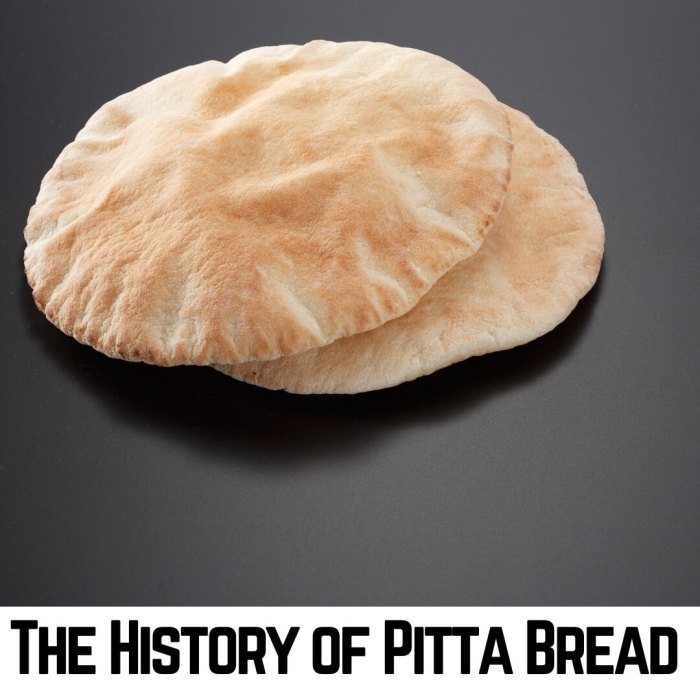
It’s fair to say pitta bread (or pita if you want to be like that) is one of our favourites bits of carbohydrate. Especially the brown variety.
And to be clear we’re going to be using the double t here for pitta. As it’s British English (and we’re English and all that, I say!) so please save your raging fury for the comments section where you can unleash your pita-based vengeance with profanity etc.
Anyway, today we’re here to explore the world of gorgeous pitta! That fantabulous flatbread that livens many a meal or just goes super well with houmous. Indeed.
What’s Pitta Bread?
It’s a flat, hollow piece of leavened bread (flatbread to be precise) you can slit open to add some sort of tasty filling.
Alternatively, you can toast the pitta up and serve it with houmous.
One of our favourite meals is just to grab two wholemeal pitta breads, toast them up, and add a houmous filling with some veg and some prawns or whatnot. Works a treat, fills you up, and is pretty damn healthy into the bargain.
So, yeah, pitta excellence is down to your choice of fillings. But you sure can’t go wrong with heading straight for the houmous (or hummus) on this one.
The popularity of the flatbread is with its immense versatility, capable of being left as a circular whole, sliced and diced, and always toasted up to deliver on its full potential.
A Brief History of the Glorious Pitta
Pitta bread takes a couple of core forms and is a flatbread, which dates all the way back to pre-history in the Middle East.
In fact, there’s pitta evidence from 14,500 years ago from the Stone Age placing the foodstuff into the era of pre-history.
Whilst that does mean it’s difficult to state just when exactly the stuff was invented, but it’s clear us humans had a concept for this early on and it’s been a staple addition to many a meal for millennia.
The bread’s popularity ensured it spread across the world rapidly as the indigenous people of the Negev desert (the Bedouins) ensured lots of new people were introduced to pitta. These people traded the flatbread for all sorts of essentials and ensured the stuff took off in raging popularity.
Barley and wheat were some of the earliest crops from the Neolithic period 10,000+ years back across the Middle East (the sweeping lands of the Fertile Crescent) and this facilitated the production of all manner of breads.
Societies such as Babylonian culture (Mesopotamia in West Asia) where locals would bake flatbrad on a tinûru—a large urn.
That was all around 4,000 years ago, but there are written records that suggest the popular pitta pouch wasn’t part of the recipe then. That developed later on.
As for the name, the “pitta” bit just means “flatbread” and that’s where it all harks from. So, despite its likely creation from the Middle East it’s actually the Mediterranean name we use to refer to the bread.
And modern pitta is everywhere!
You can’t go into a supermarket without spotting the stuff. These days they’re mass produced and baked in an oven.
The Types of Pitta Bread
The bread is available as white, brown, mini, and pocketless varieties. But it’s mostly famous for those big old pouches.
Kind of like a hamster’s cheeks, you can stuff all sorts of foods into the pouch and have a jolly old meal of it.
Arabic Pitta
In the Middle East there are all sorts of pitta varieties. As you can see, lots of pouch room and huge things. Definitely big on excellence.
These are soft, pillowy warm breads that are a bit like a safety blanket. But not! Often made with just four ingredients and going by the name of Arab, Lebanese, or Syrian pitta it’s very popular in the Middle East.
Greek Pitta
The Greek variety tends to be smaller than the Arabic variety and can go by the name of pide or khubz.
It’s very soft compare to alternative and is slightly thicker. The big difference is there isn’t a clear pouch for the food, which you instead must make my slicing them up a bit.
However, the Greek stuff is ideal for houmous. Just toast it up and dip it into the chickpea-based stuff for a delicious delight.
How to Make Pitta Bread
Chef Akis Petretzikis is on hand to provide the recipe details you need to make pitta bread. Sure, he’s handsome… but not as handsome as Hunk of the Millennium Jamie Oliver. Understand?!
So, yes, you don’t even need a bloody oven to manage these things! How cool is that? Just a hob and mixed the ingredients and you’re done.
If you want to to do the oven way then Paul Hollywood has a fabulous technique.
Basically, the ingredients you’ll need are:
Wheat flour
Yeast
Water
Kosher salt
Pinch of sugar
Extra virgin olive oil
Follow all the instructions from Mr. Petretzikis or Mr. Hollywood above and you’ll be sorted with some epic flatbreads before you can say, “Pass me the tzatziki, stupid husband!“

Huh, I’ve never seen that word with two Ts before. To paraphrase Jemaine “It doesn’t matter that they spell words slightly differently-some would say, more correctly. Each person deserves to be treated like a person.”
LikeLiked by 1 person
This was difficult to do as I know some people prefer the one t. However, the real drama I had was writing the history of houmous piece. Hummus… houmous… houmus… truly, it’s the most horrifying thing.
LikeLiked by 1 person
Whenever I see/hear the word hummus I usually think of Lord Humungus, which is a pretty different thing. In case you were wondering what I think of when I see/hear the word hummus.
LikeLiked by 1 person
You never know, Lord Humungus may have enjoyed houmous as well and had his own range as a side hustle.
LikeLiked by 1 person
Humongous Brand Houmous – Taste the Apocalypse!
LikeLiked by 1 person
(with with beetroot flavour)
I think that’s a winner and I don’t even like beetroot flavoured houmous!
LikeLiked by 1 person